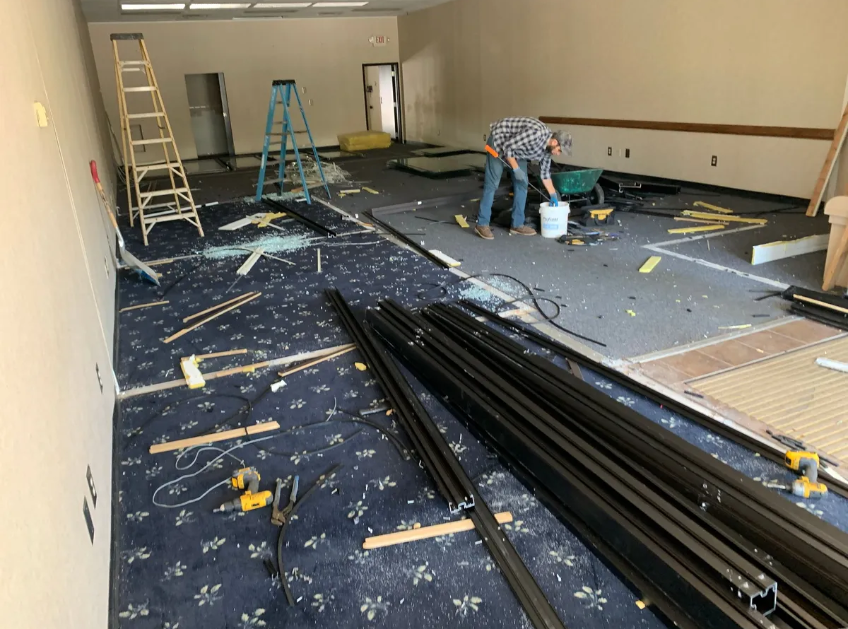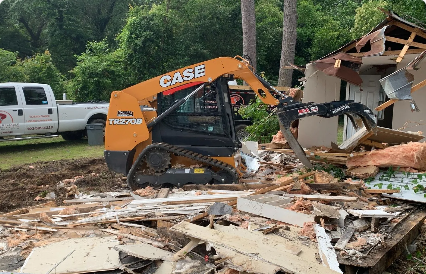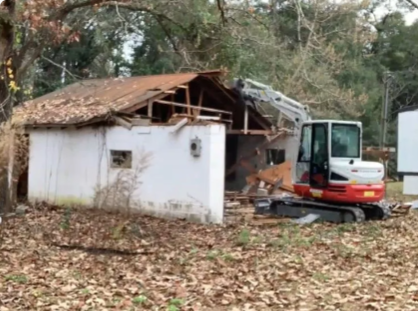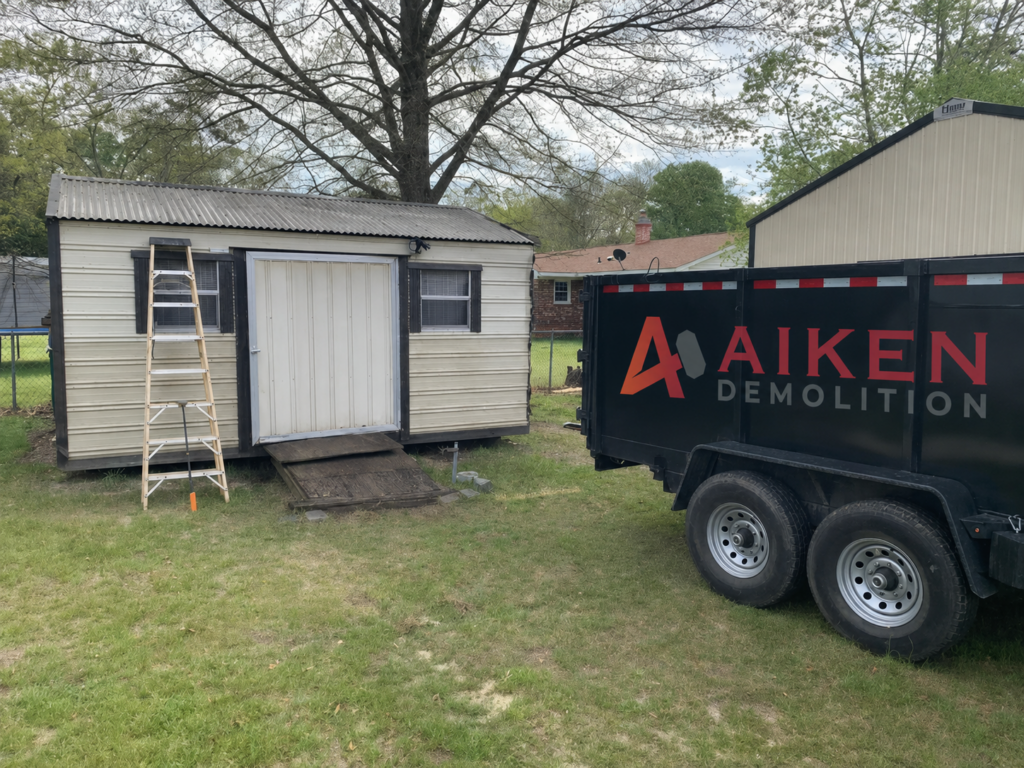
What to Know
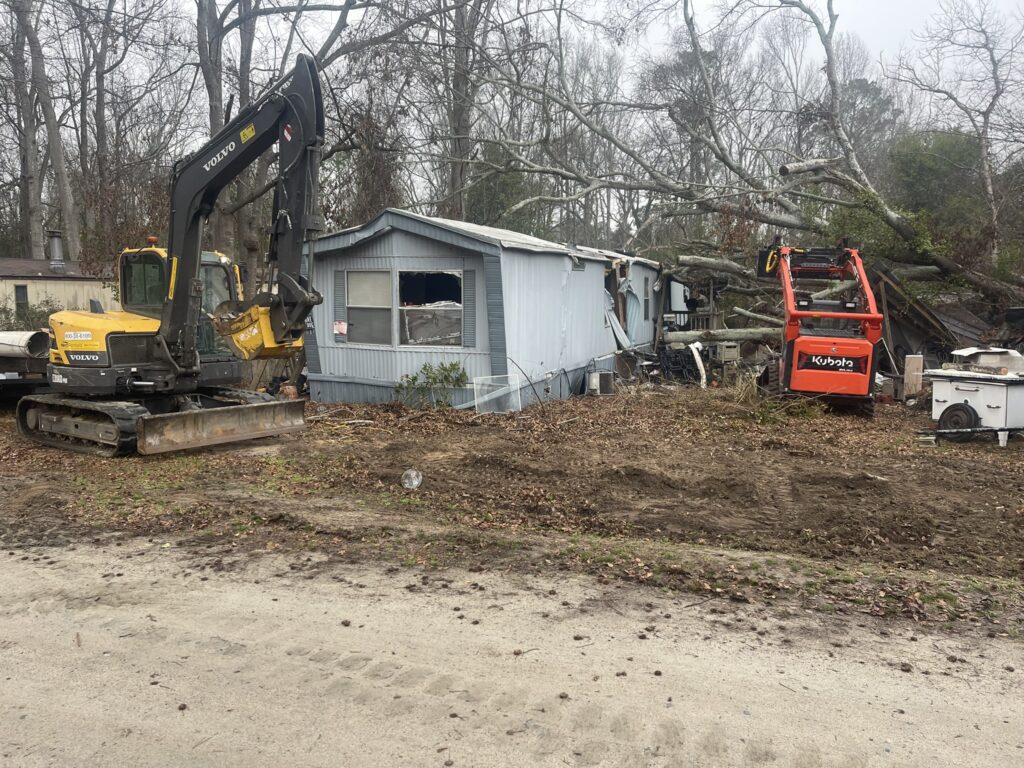
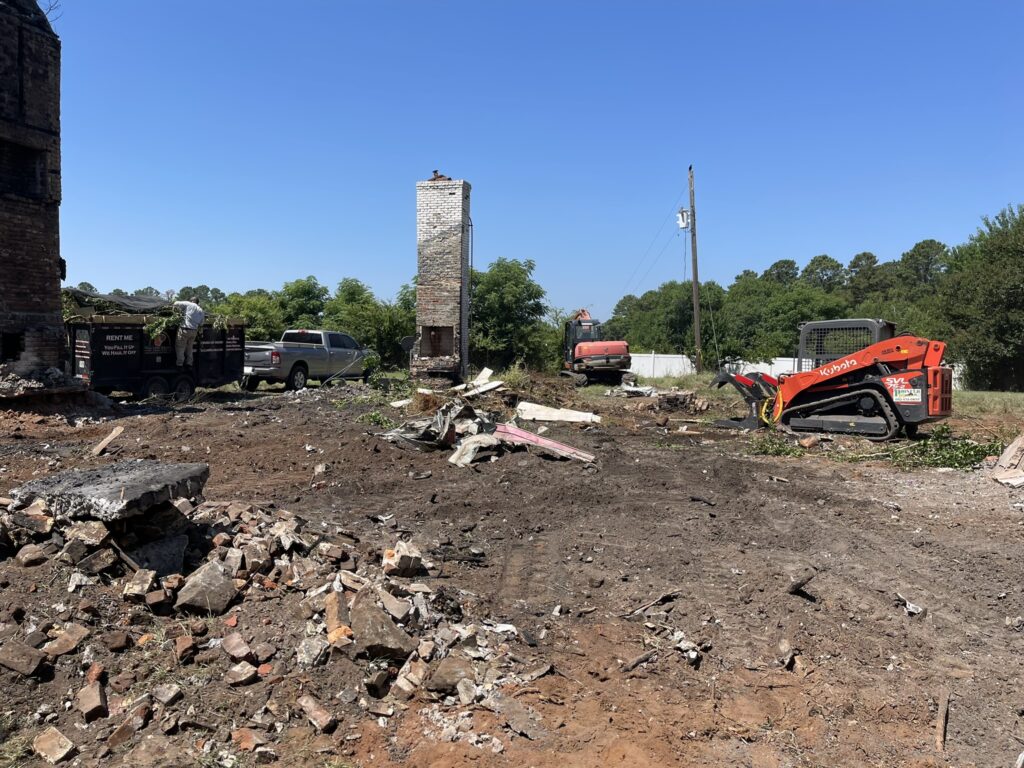
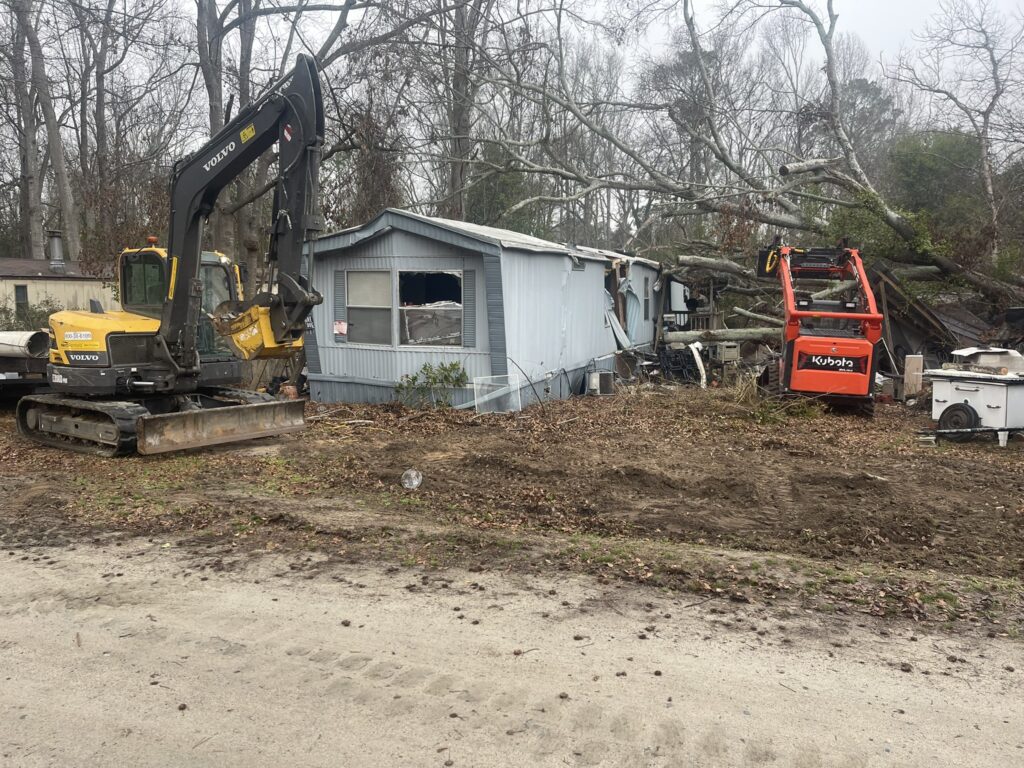
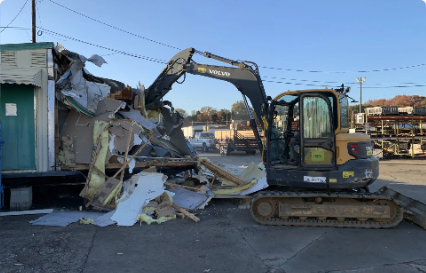
Demolition equipment selection begins with the project, not the machine. A contractor considers the material being removed, available access, nearby utilities and improvements, the work sequence, debris handling, and the condition the customer wants afterward.
The largest machine is not automatically the best choice. A tool that is productive in an open work area may be unsuitable where gates, occupied buildings, pools, driveways, landscaping, overhead lines, or underground facilities limit movement.
Property owners often see an excavator, skid steer, hydraulic breaker, grapple, loader, or truck and wonder why that particular equipment was used. The answer should connect to the written scope and actual site conditions. Equipment is one part of a plan that also includes access, protection, loading, hauling, cleanup, and the next use of the property.
Start With the Material Being Removed
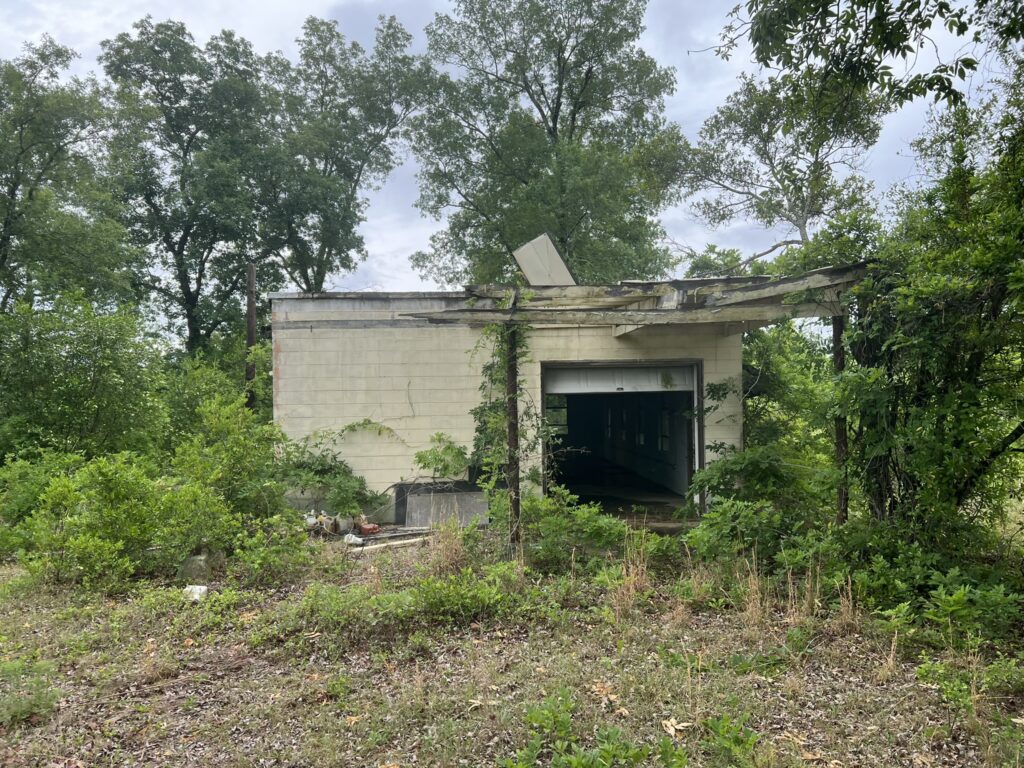
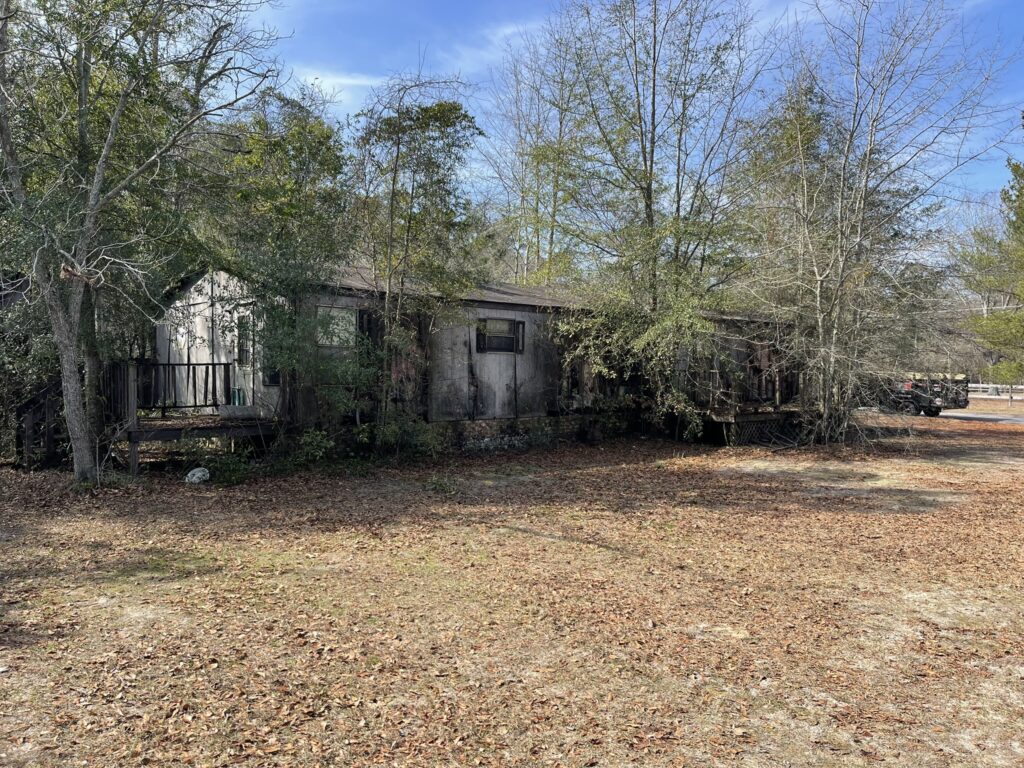
Wood framing, concrete, masonry, metal, roofing, mobile-home components, and mixed debris behave differently during removal. The contractor needs to understand what the improvement is made of, how it was built, and whether hidden thickness or reinforcement may change the work.
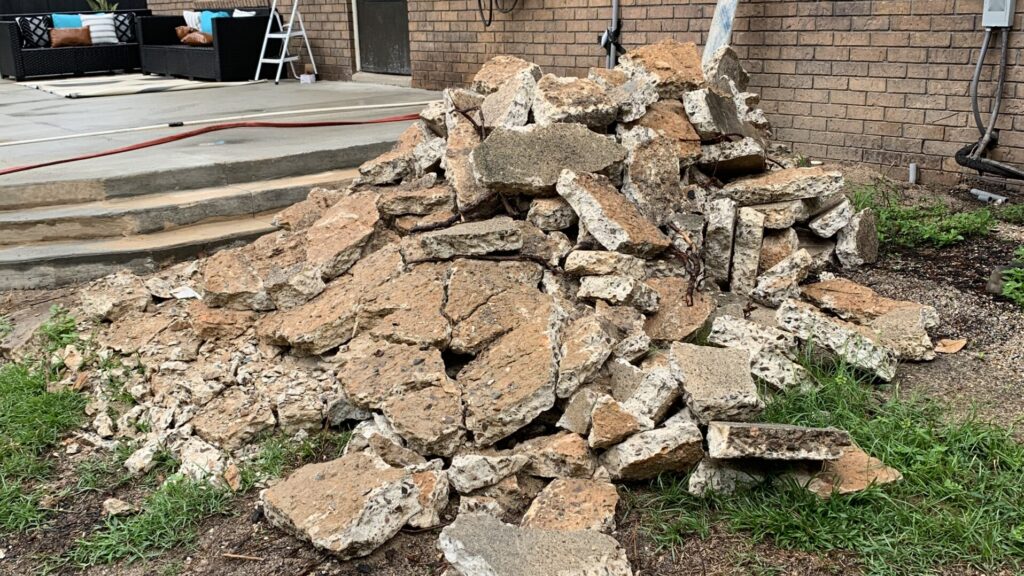
Concrete is a useful example. A thin, accessible section and a thick reinforced mass may require different attachments, working positions, reduction methods, and hauling plans. The equipment must be able to break or lift the material into manageable pieces without treating every slab or foundation as though it were identical.
For a broader service explanation, see Concrete Removal in Aiken SC.
Access Determines What Can Reach the Work Area
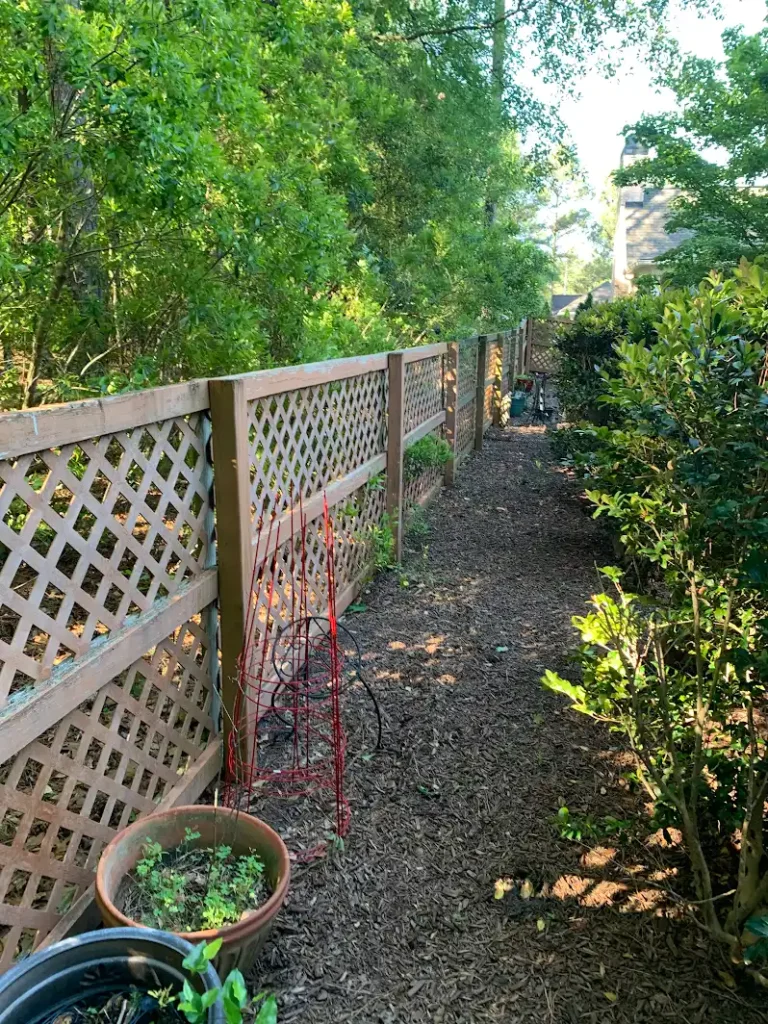
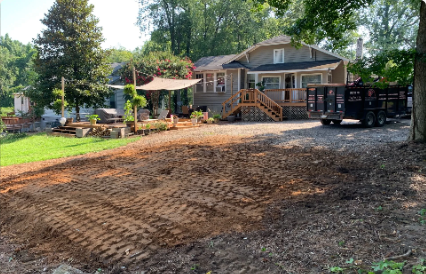
Before equipment can do the work, it has to reach the work. Gates, driveway width, turning room, slopes, soft ground, low branches, overhead lines, fences, neighboring improvements, and truck positioning can all affect the plan.
Useful quote photographs should show the route from the street to the project, not only a close view of the structure. An onsite review may still be needed when clearance, ground conditions, or staging space cannot be confirmed from photographs.
Equipment Size Is Only One Consideration
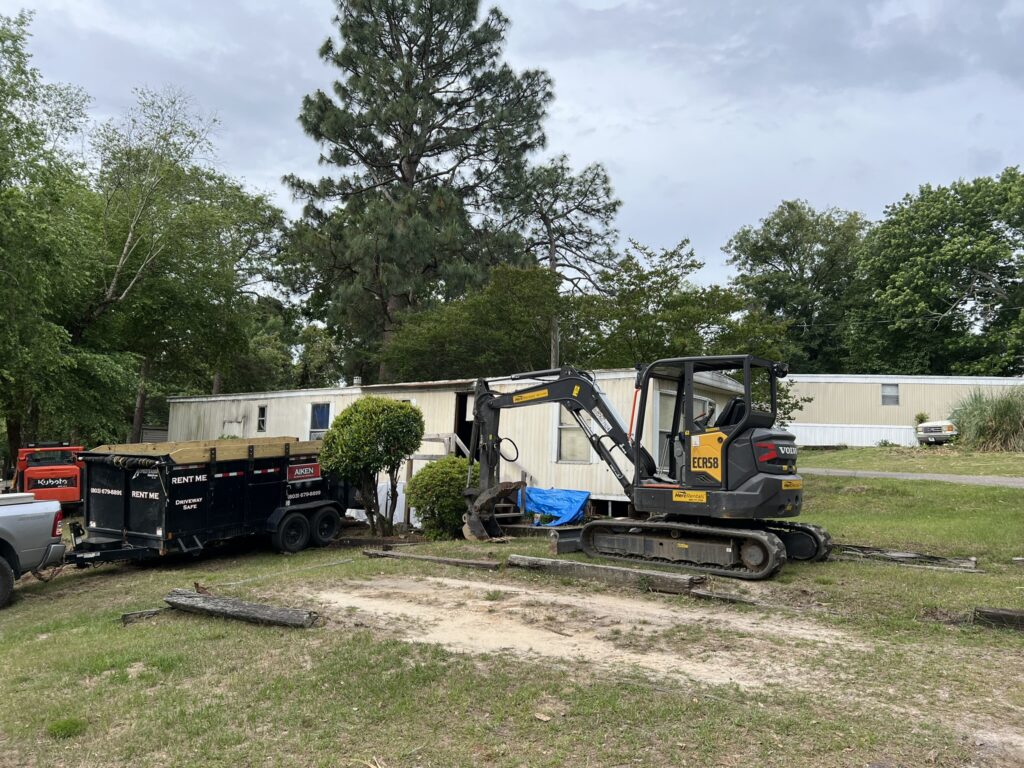
A compact machine may improve access in a confined area, while a larger machine may provide needed reach or capacity on a more open site. The appropriate choice depends on the whole assignment, including how debris will be controlled, loaded, and removed.
Nearby Utilities and Retained Features Shape the Plan
The work area may contain public utility lines, privately owned electrical or water facilities, irrigation, septic components, wells, drainage features, slabs, driveways, pools, trees, fences, or buildings that must remain. Known facilities should be located, disconnected, protected, or otherwise addressed as the project requires.
Locating underground facilities is not the same as disconnecting a service. Responsibilities should be clarified before demolition begins. Read Who Disconnects Utilities Before House or Mobile Home Demolition? for more detail.
A Real Aiken Example: Matching a Breaker to Thick Concrete
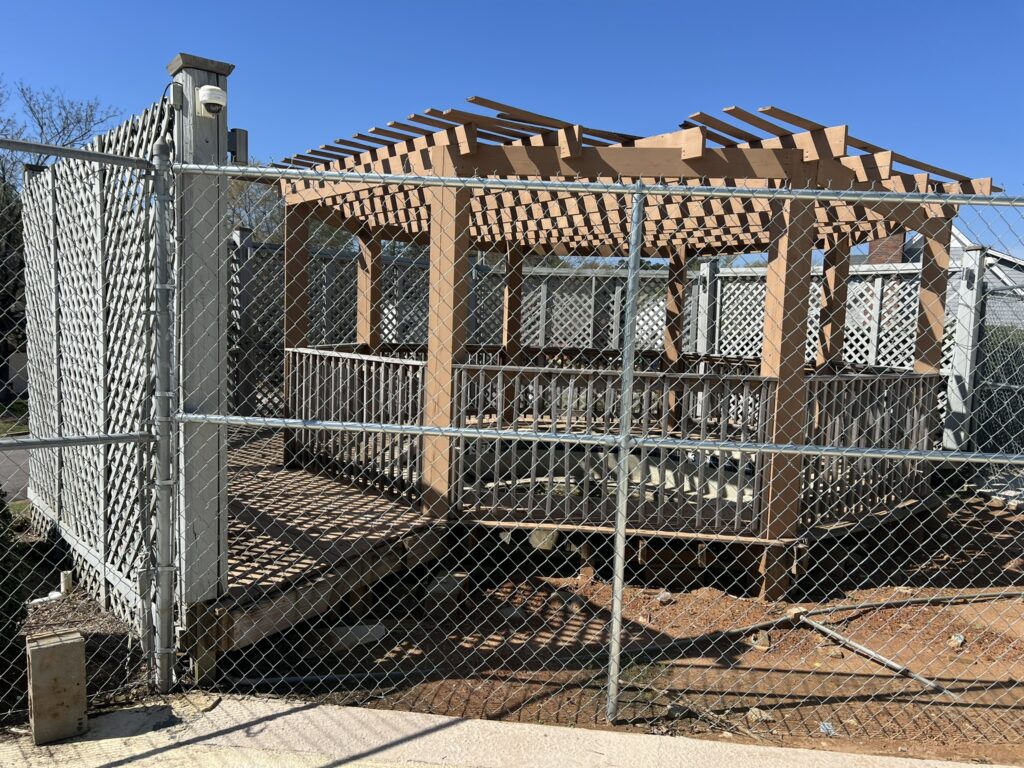
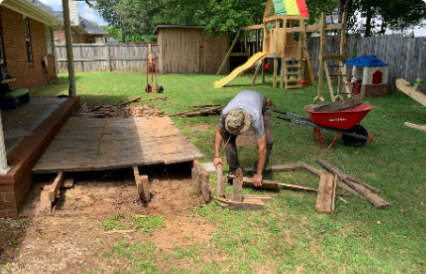
During an Aiken HOA spa-and-deck removal project, the crew first removed the wooden deck and pergola to create access to the concrete spa. Underground water and electrical lines were close to the work, so Aiken Demolition coordinated with the HOA and utility providers before concrete removal.
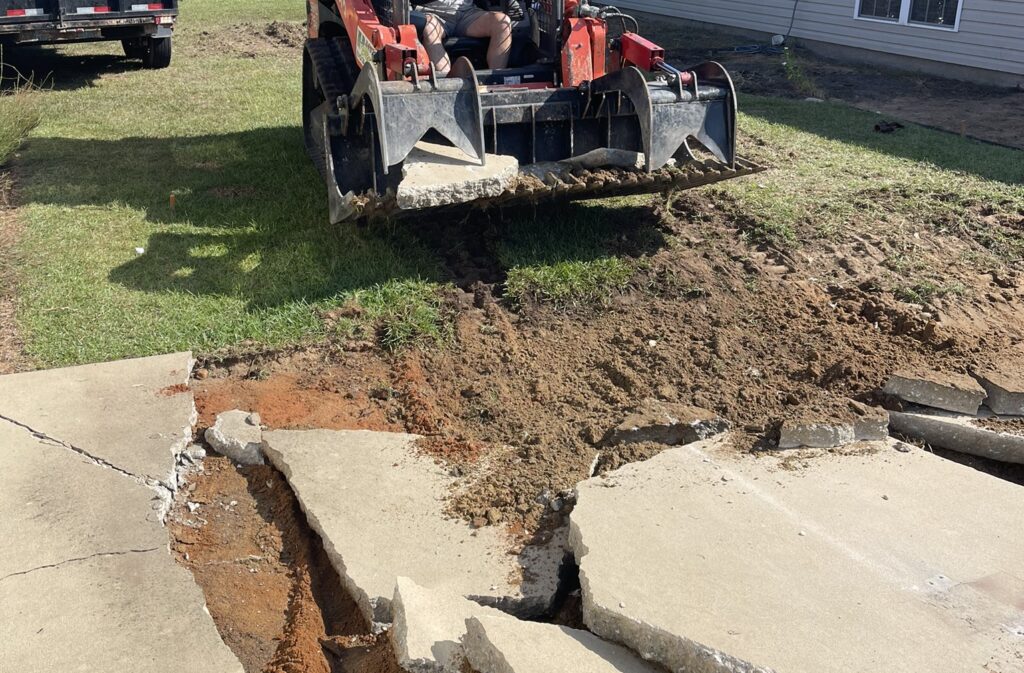
The contractor reported that the concrete reached approximately 2.5 feet thick in places. A skid-steer-mounted hydraulic breaker was used to reduce it into manageable pieces. This was a project-specific equipment decision based on the material, access, work sequence, and surrounding conditions; it is not a statement that the same attachment is required for every concrete project.
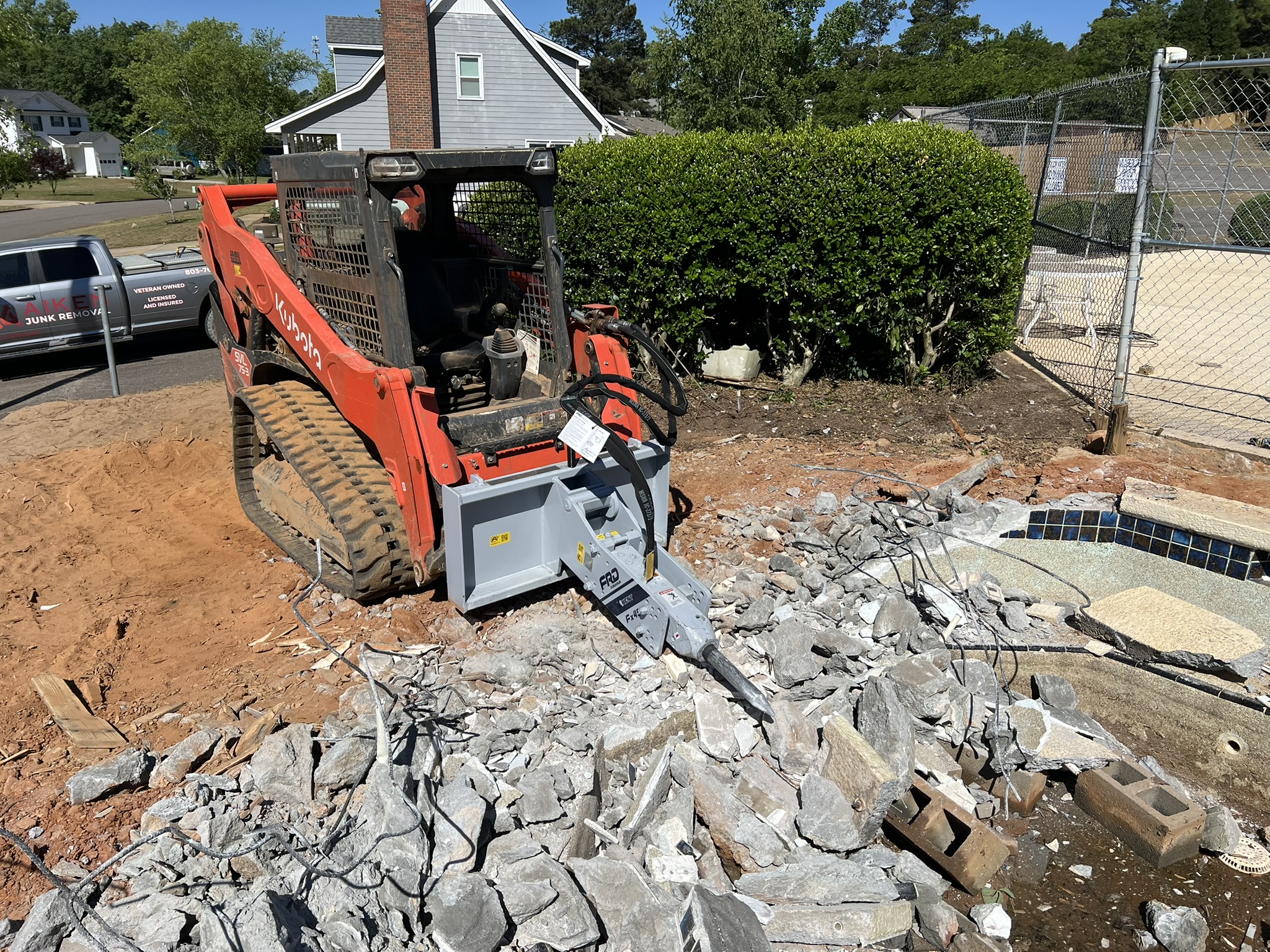
See the full Aiken spa and deck removal project for the complete before, during, equipment, and after sequence.
Attachments Help One Machine Perform Different Tasks
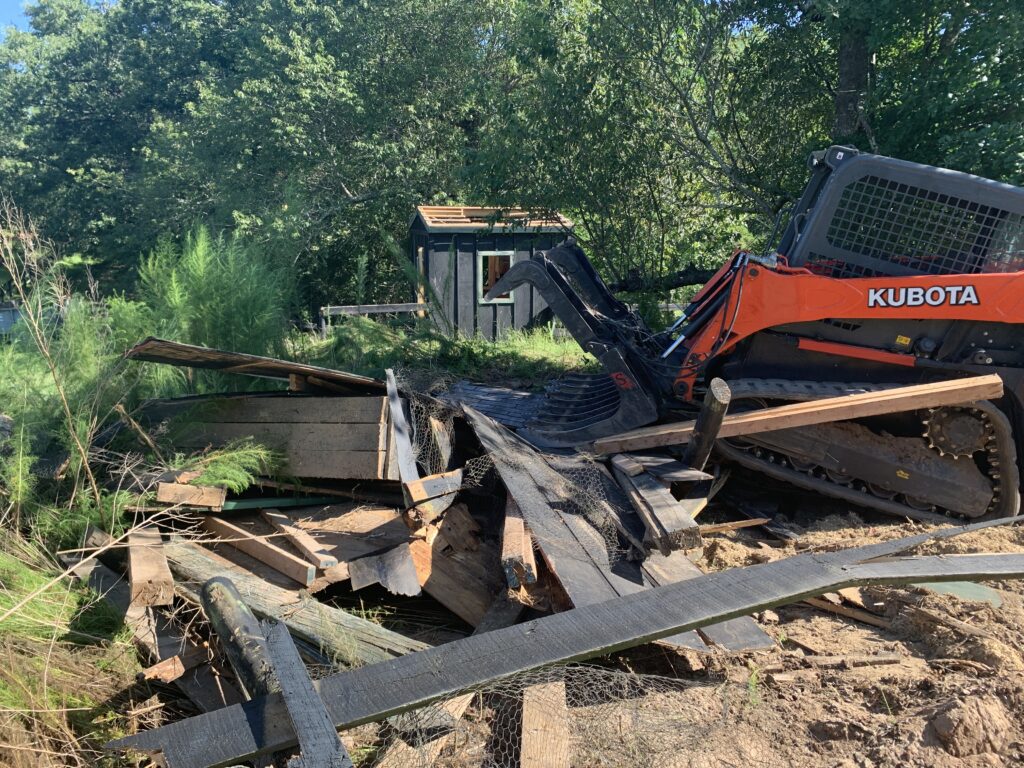
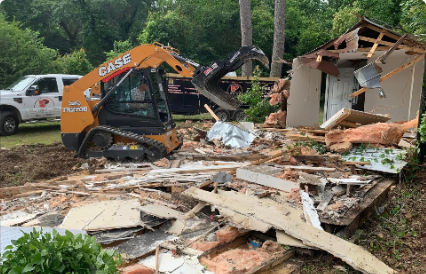
The carrier machine is only part of the decision. Buckets, breakers, grapples, thumbs, forks, and other attachments are designed for different functions. One may help separate or grip material, another may reduce concrete, and another may support loading or grading.
Changing attachments does not eliminate the need for planning. The contractor still has to consider reach, machine stability, ground conditions, material weight, working clearance, dust and debris control, and the location of people or improvements outside the immediate work zone.
Debris Handling Is Part of Equipment Selection
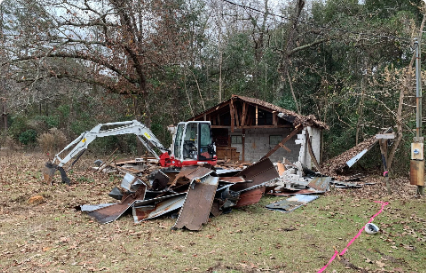
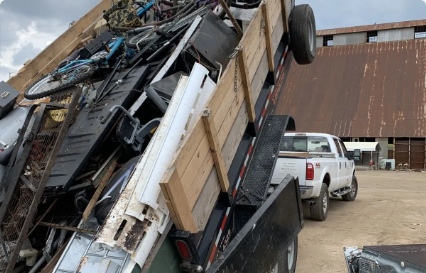
Demolition creates material that must be moved from the point of removal to a container, truck, stockpile, or approved receiving destination. The work plan should consider how pieces will be reduced, separated when practical, loaded, and hauled without blocking the site or damaging an agreed access route.
Recycling, salvage, repurposing, or material reuse may be considered when practical and when material condition, quantity, access, transportation, and receiving options make it possible. Those outcomes vary by project and should not be promised simply because a certain machine or attachment is present.
The Requested Finish Influences the Last Equipment on Site
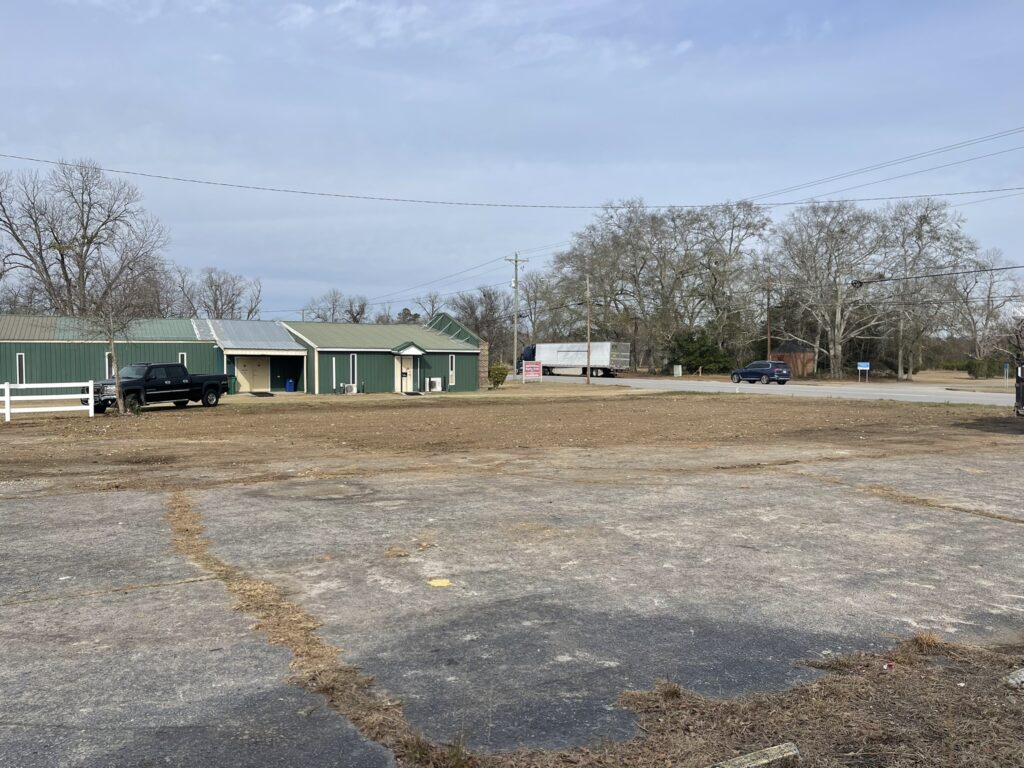
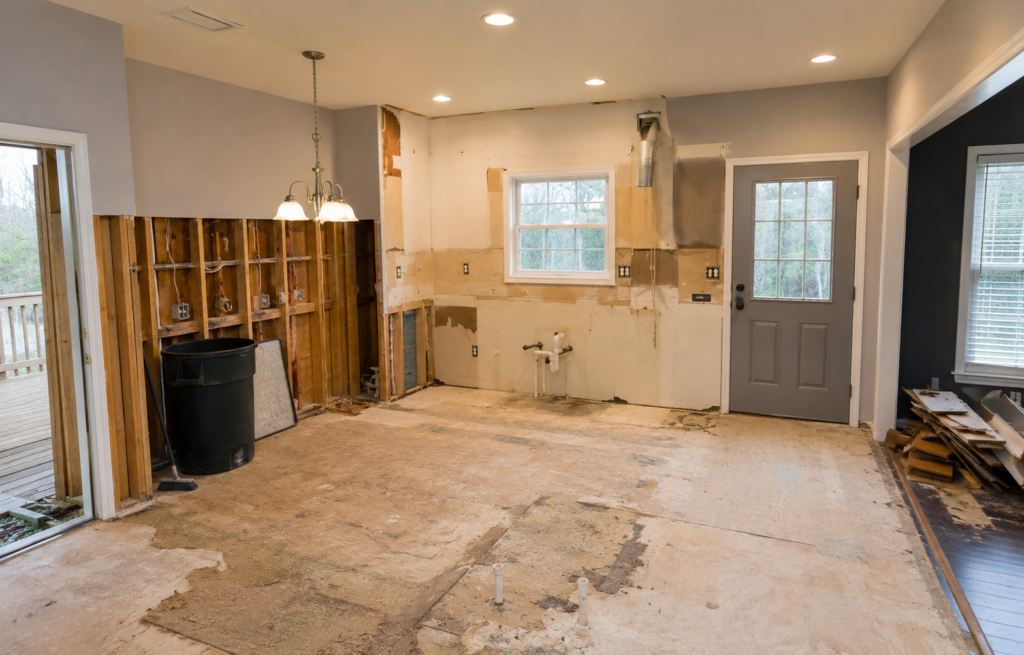
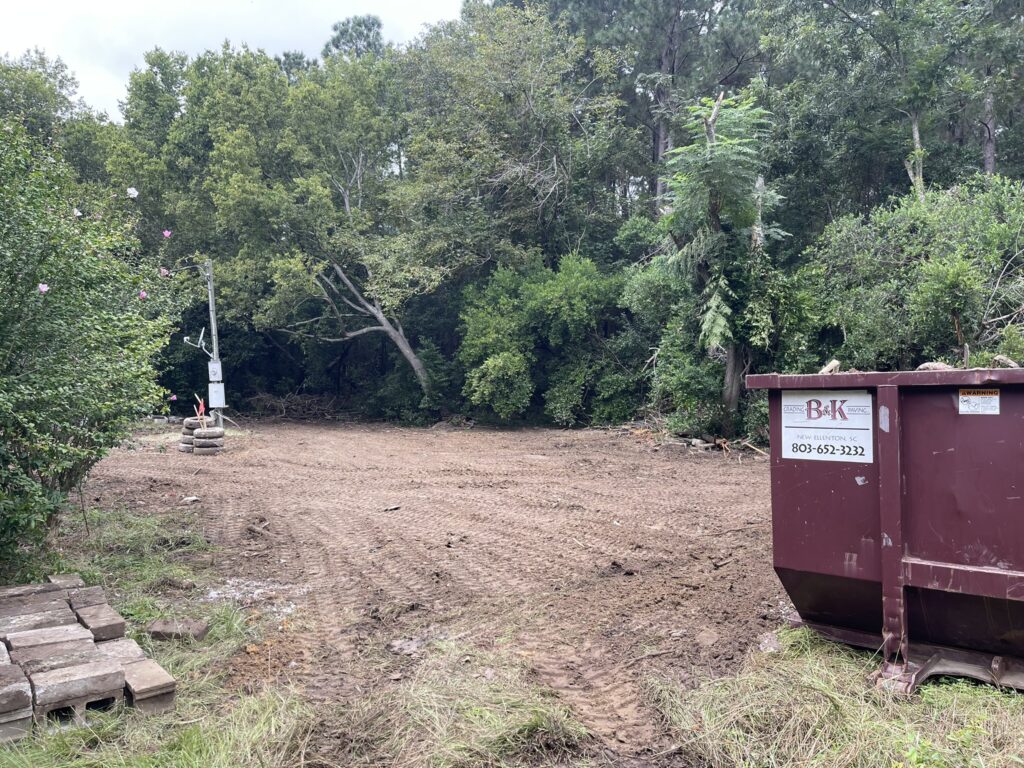
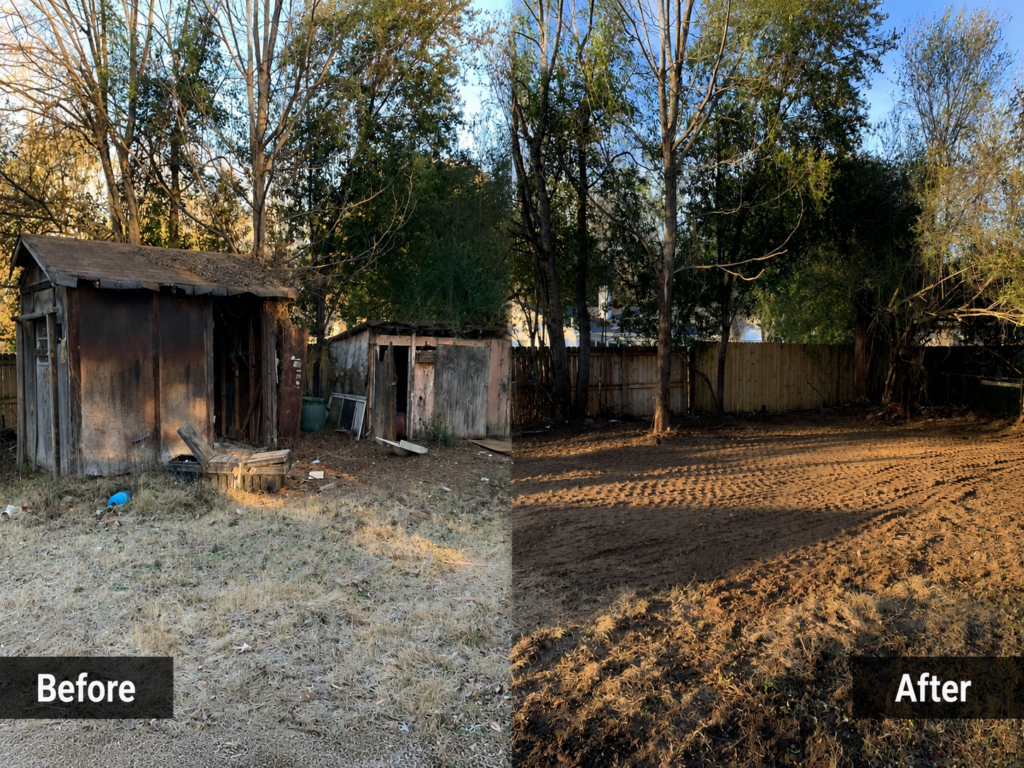
Removing the improvement may not be the end of the assignment. Depending on the agreed scope, a void may need backfill, imported soil, grading, or preparation for landscaping or another contractor. A slab, driveway, pad, tree, or access route may need to remain.
Those decisions should be made before the work starts because they can influence equipment, material deliveries, labor, and scheduling. The written scope should describe the desired finished condition without assuming that “cleaned up” means the same thing to everyone.
How Equipment Choices Affect a Quote
Equipment needs can influence a quote through mobilization, attachment requirements, working time, access limitations, material handling, trucking, and the finishing work included. They are only part of the total. Construction, condition, contents, utilities, permits, debris volume and weight, hauling, foundations, retained features, and the desired final condition may also matter.
No reliable price can be assigned from the machine name alone. Property owners should compare written scopes and responsibilities, not assume that two quotes describe the same result because both mention similar equipment. The Aiken demolition cost guide explains broader cost factors without assigning unsupported prices.
Final Summary
The right demolition equipment is the equipment that fits the actual material, access, utilities, retained improvements, debris route, work sequence, and final-site goal. A thoughtful contractor should be able to connect the chosen machine and attachments to those conditions instead of presenting equipment size as the entire plan.
Discuss Your Demolition Project
Share the property address, photographs, access conditions, what must be removed, and what must remain. Aiken Demolition can review the information needed to begin defining the scope.
Request a Project QuoteFrequently Asked Questions
Does bigger demolition equipment always mean a faster project?
No. Productivity depends on access, reach, material, attachments, staging, debris handling, and surrounding conditions. A larger machine may not fit or may not be appropriate for retained improvements.
Why would a contractor use a hydraulic breaker?
A hydraulic breaker may be used to reduce substantial concrete or masonry into manageable pieces. Whether it is appropriate depends on thickness, reinforcement, access, nearby features, and the work plan.
Can demolition equipment fit through a residential gate?
Some compact equipment can work in limited-access areas, but gate width is only one factor. Turning room, ground conditions, overhead clearance, slopes, utilities, and the loading route also need review.
What photographs help with equipment planning?
Provide the structure or improvement, the route from the street, gates, turns, slopes, nearby buildings, trees, overhead lines, utility equipment, retained features, and available truck or container space.
Does the contractor choose equipment before visiting the site?
Photographs and project information may support preliminary planning, but an onsite review may be needed when access, construction, material thickness, utilities, or protection requirements are uncertain.
Is debris hauling separate from demolition equipment?
They are connected parts of the plan. Material must be reduced, moved, loaded, and hauled, so the equipment choice should account for the debris route and available staging space.
Can demolition materials be recycled or reused?
Sometimes. Recycling, salvage, repurposing, or reuse may occur when practical or possible, depending on material condition, quantity, access, transportation, and available receiving options.
What should I provide when requesting a demolition quote?
Provide the exact address, clear photographs, what goes, what stays, known utilities, access limitations, contents or loose debris, concrete or foundation decisions, and the desired final site condition.