What to Know
House demolition in Aiken SC can involve much more than bringing down the visible structure. A complete service may include planning the scope, confirming permit and utility responsibilities, removing attached features, loading and hauling debris, deciding what happens to the foundation, and leaving the property in an agreed final condition.
The exact service depends on the house, property access, construction materials, nearby improvements, regulatory requirements, and the owner's plans for the land. The quote should clearly explain what is included, what remains, and who is responsible for each step.
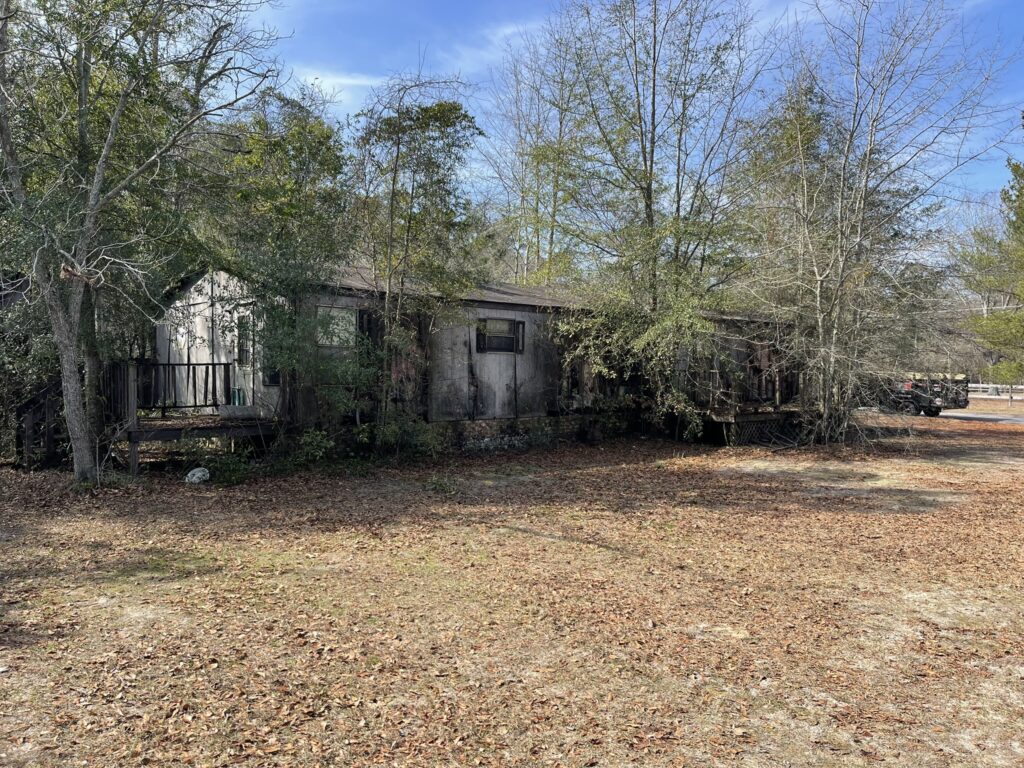
A house may need to be removed because it has deteriorated beyond practical repair, suffered major damage, become unsafe or unwanted, or stands in the way of a different use for the property. Regardless of the reason, the project should begin with a clear description of the result the property owner wants.
Aiken Demolition provides structure demolition in Aiken SC for houses and other whole structures. The work plan is developed around the actual building and site rather than a one-size-fits-all checklist. A vacant house on an open lot presents a different project from a house located near trees, a well, a septic system, overhead service lines, neighboring buildings, or a driveway that must remain available.
What Is Included in a House Demolition Service?
A house demolition service should describe the work required to remove the agreed structure and manage the resulting material. Depending on the project, that scope may include:
- Reviewing the house, access route, surrounding property, and visible site conditions
- Defining which structures, additions, porches, steps, decks, or exterior features are included
- Confirming who will handle applicable permits, notifications, inspections, and documentation
- Coordinating required utility disconnections and underground facility locating
- Removing the whole structure in a planned sequence
- Loading, hauling, and properly handling demolition debris
- Removing or retaining foundations, slabs, footings, and other concrete as agreed
- Completing the specified cleanup, backfill, grading, or final walkthrough
Not every item is included automatically. The quote should identify the tasks that apply to the property and state any important exclusions. That gives the customer a realistic picture of the finished result before equipment arrives.
A House Is Only One Part of the Site
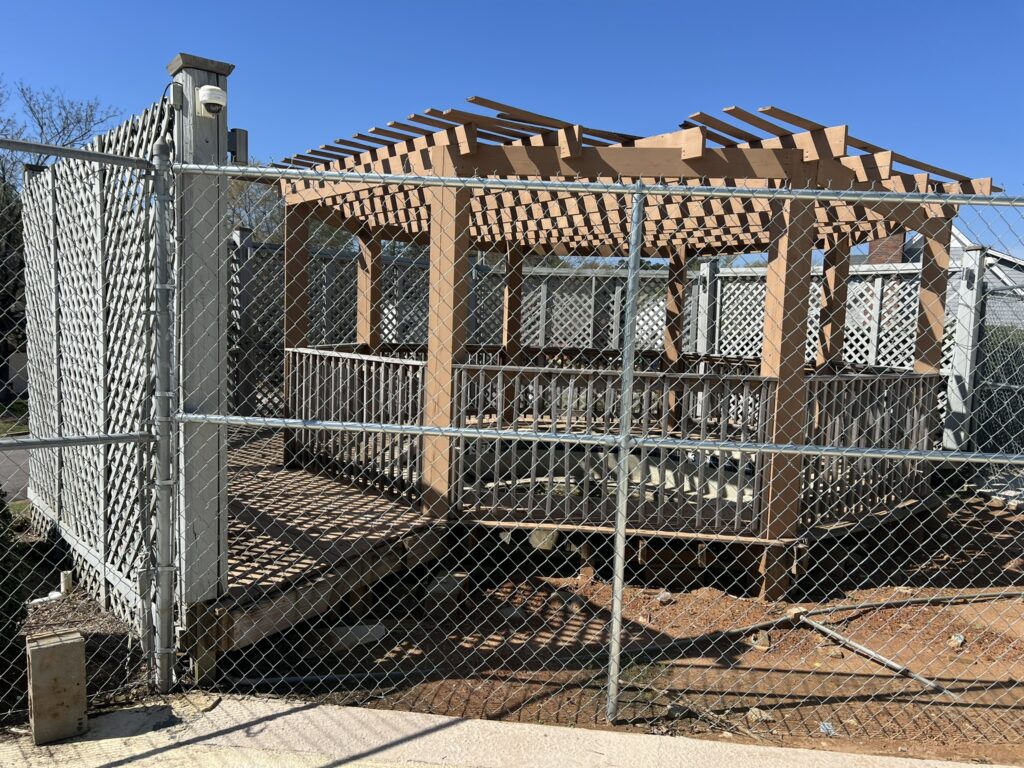
The demolition plan should identify everything connected to or surrounding the house. Porches, additions, detached buildings, driveways, wells, septic components, fences, trees, stored contents, and utility lines can affect the work even when some of them are intended to remain.
Step 1: Review the House and the Property
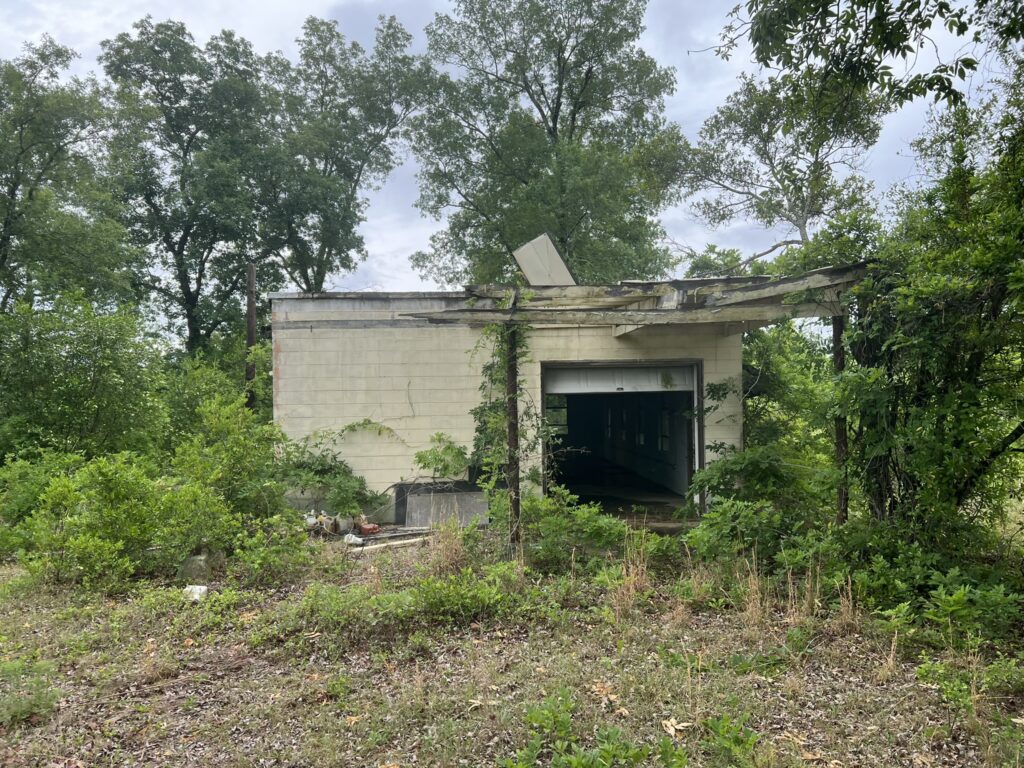
The first planning step is understanding what is present. The contractor needs to see the house, its construction, visible damage, attachments, surrounding improvements, and the route equipment and hauling vehicles would use.
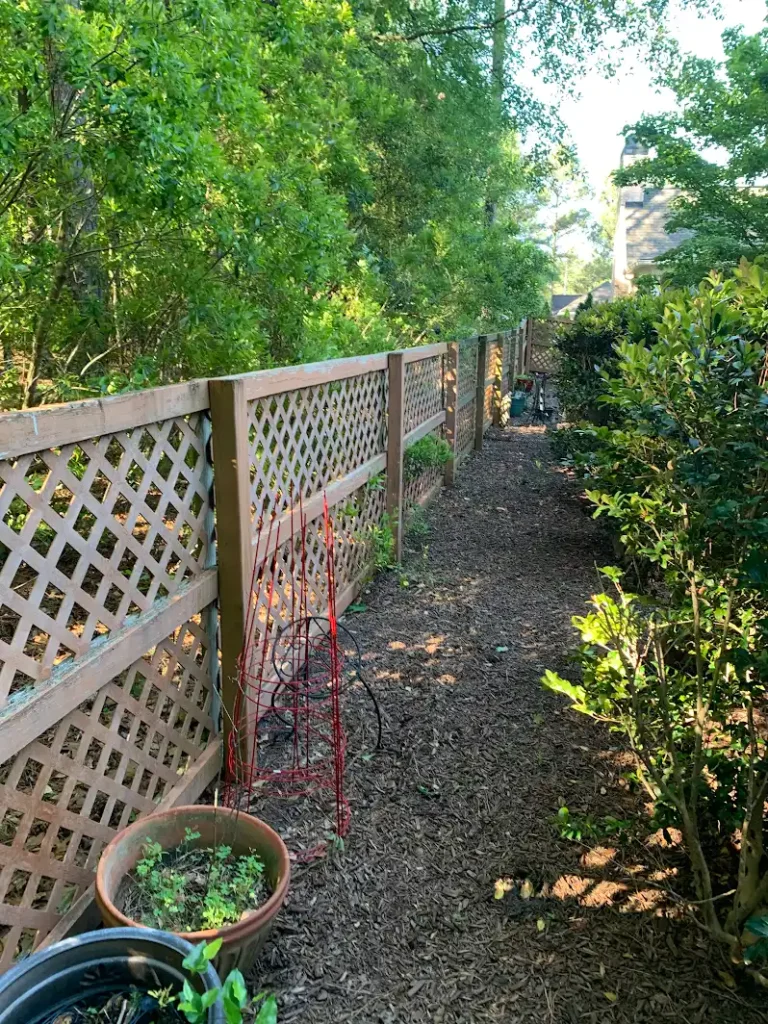
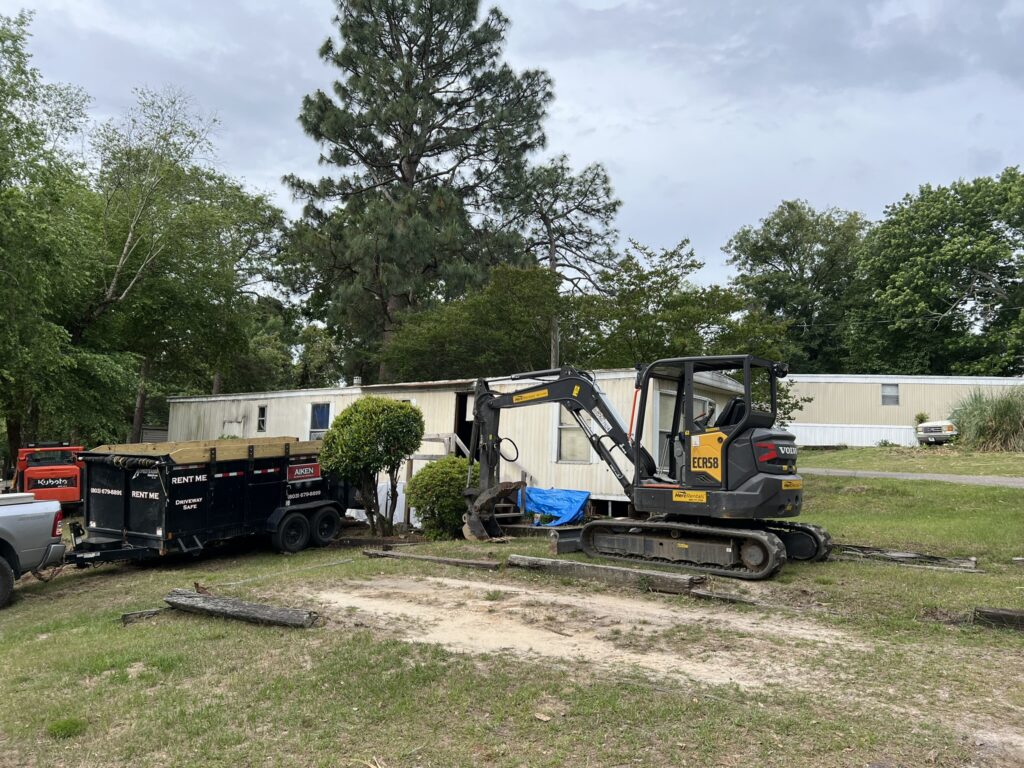
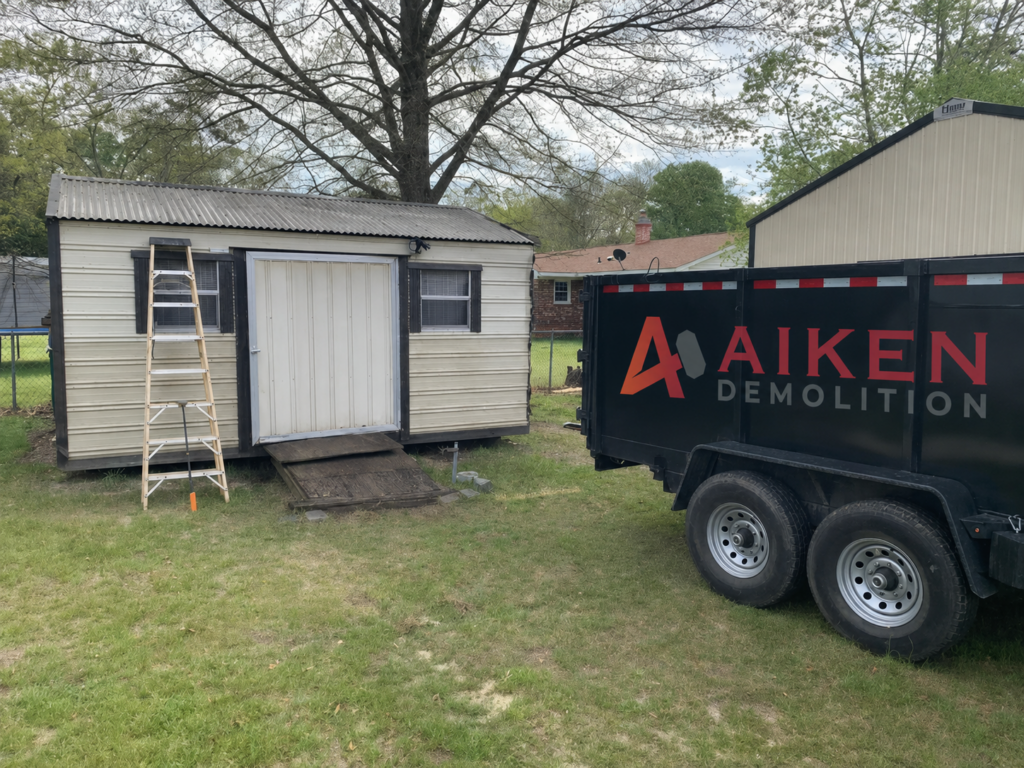
Access can influence equipment choice and the order of work. A wide, open approach may allow machinery and trailers to operate close to the structure. A narrow driveway, soft ground, low branches, fences, slopes, nearby buildings, or limited turning space may require a different approach. The location of overhead lines, meters, tanks, wells, septic areas, and visible utility routes should also be discussed during the site review.
Photos are useful when requesting an initial conversation or quote, especially when they show all sides of the house, the access path, the inside condition when entry is appropriate, and anything nearby that must be protected. A site visit may still be needed because photographs cannot show every elevation change, buried feature, weak surface, or hidden condition.
Step 2: Define What Comes Down and What Stays
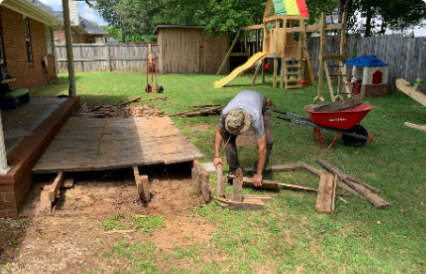
“Remove the house” can leave several important questions unanswered. The owner and contractor should decide whether the scope also includes attached additions, porches, decks, ramps, steps, awnings, chimneys, detached sheds, abandoned contents, loose junk, fencing, landscaping, or other materials around the structure.
The same conversation should identify what must remain. A property owner may need to retain a driveway, septic system, private well, utility service for another building, mature trees, a detached garage, a fence line, or a portion of the foundation. Those decisions affect equipment movement, debris handling, and the final condition of the property.
The distinction between removing a whole house and removing a smaller feature is explained further in Light Demolition vs Structure Demolition in Aiken SC.
Step 3: Confirm Permit and Regulatory Responsibilities
Permit and review requirements can depend on the complete property address, jurisdiction, structure, and scope. Aiken County Planning and Development serves unincorporated areas of Aiken County outside the city limits of Aiken and North Augusta. Properties inside a municipality may follow that municipality's process instead.
The customer and contractor should confirm which authority serves the property and decide who will submit the applicable paperwork. If the contractor is handling permit administration, that responsibility should be included in the quote. If the property owner is handling it, the required documents and timing should be settled before the demolition start date.
South Carolina Department of Environmental Services requirements may also apply depending on the building and circumstances. SCDES states that certain private residences containing four or fewer units may be exempt from its regulated-facility demolition requirements, but it lists important exceptions, including some residences previously used for nonresidential purposes and demolitions connected with larger projects. The property owner and contractor should verify the requirements for the actual structure rather than assuming an exemption applies.
For a broader overview, read Do I Need a Demolition Permit in Aiken SC?
Step 4: Address Utilities Before Demolition Begins
A house may have electric, natural-gas or propane, water, sewer, septic, well, telephone, cable, or internet connections. Closing an account does not necessarily mean the physical service has been disconnected, capped, removed, or otherwise prepared for demolition.
The responsible utility provider or qualified professional may need to perform or confirm the required work. If another building on the property will remain occupied, the plan should also identify which services must stay active and how they will be protected.
South Carolina 811 coordinates notice to participating facility operators concerning underground facilities. Its 2026 excavator guidance also explains that private lines beyond a utility operator's ownership point may require separate locating. Utility disconnection and utility locating are related planning steps, but they are not the same service.
Read Who Disconnects Utilities Before House or Mobile Home Demolition in Aiken SC? for a more detailed explanation.
Do Not Treat an Empty House as a Disconnected House
A long-vacant house may still have meters, service lines, private utilities, septic components, or other systems in and around the work area. The project plan should rely on confirmed information rather than the appearance or age of the property.
Step 5: Carry Out Whole-Structure Demolition
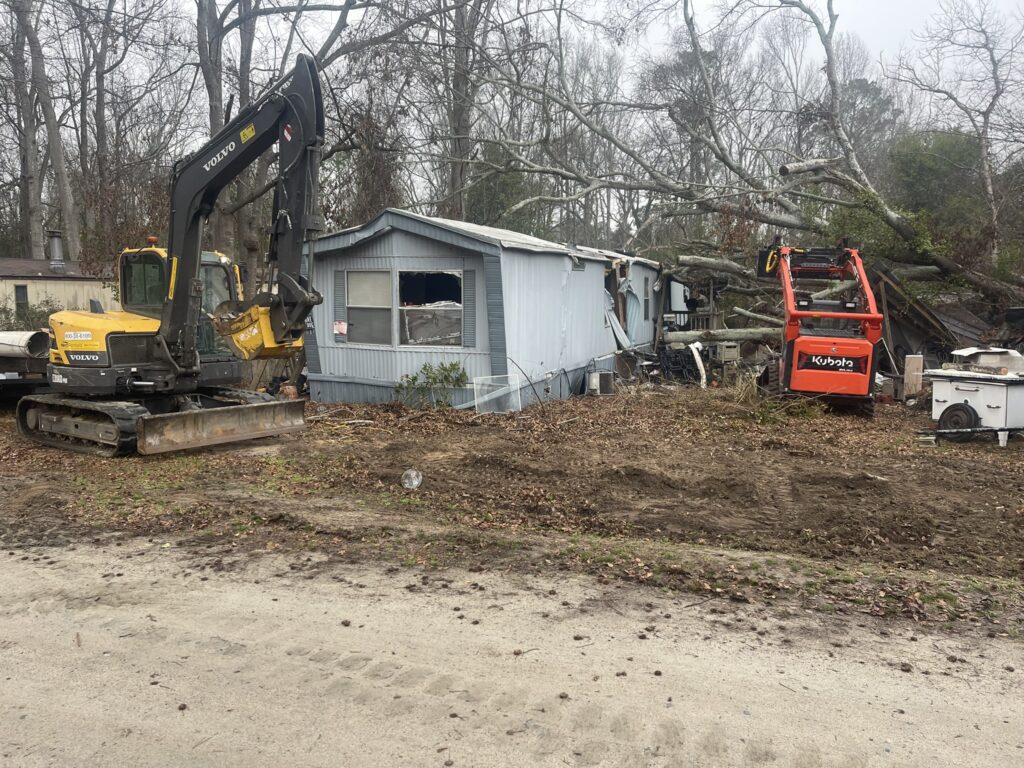
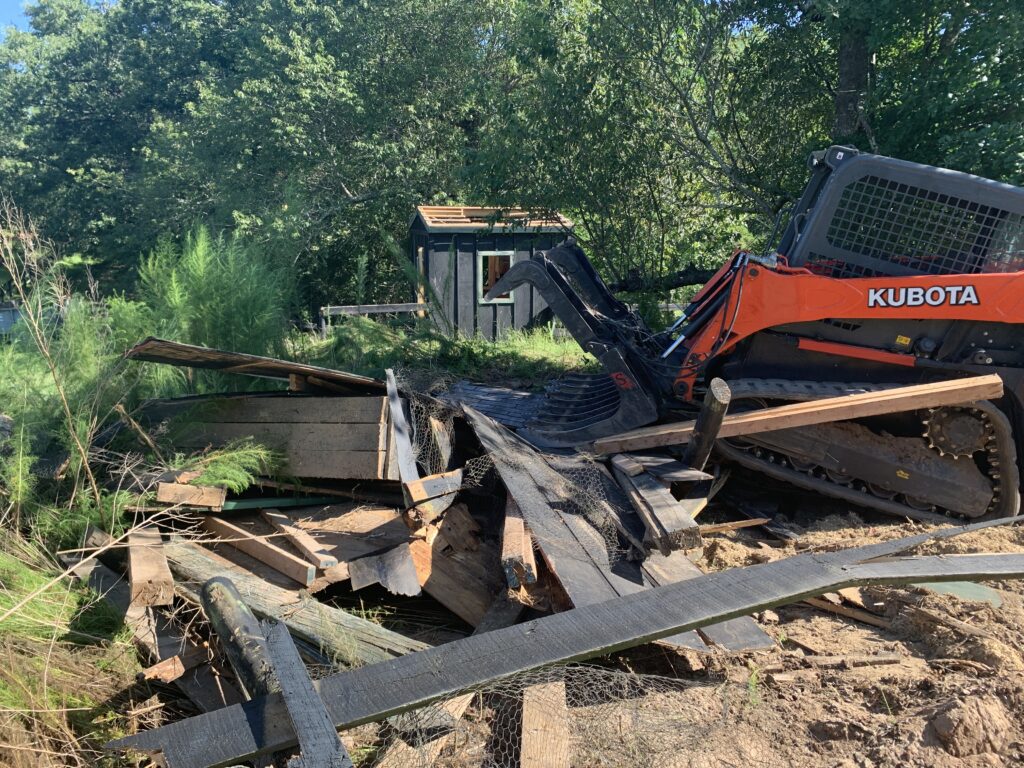
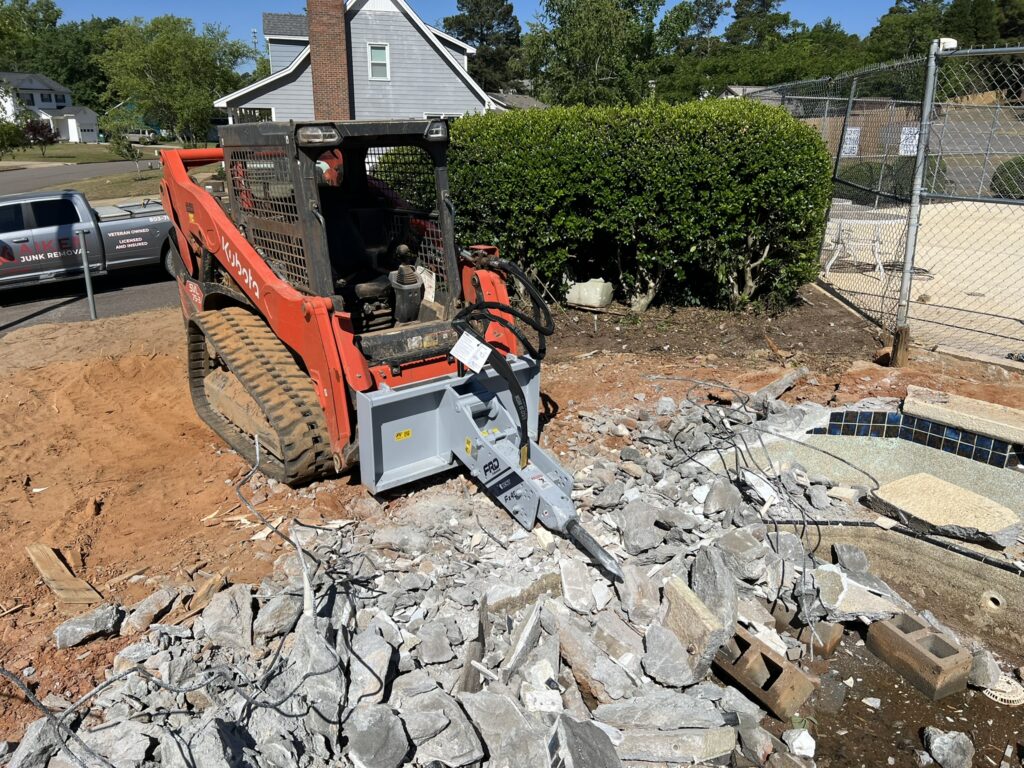
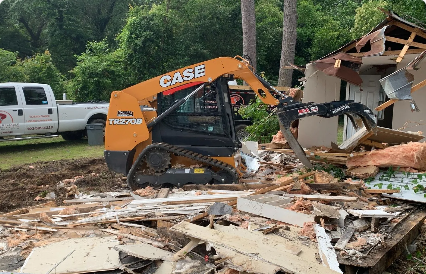
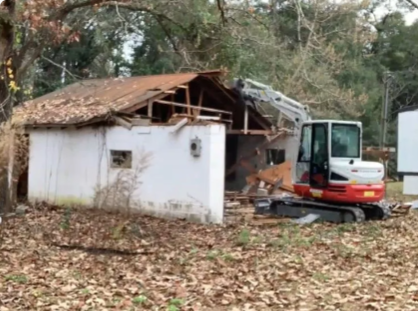
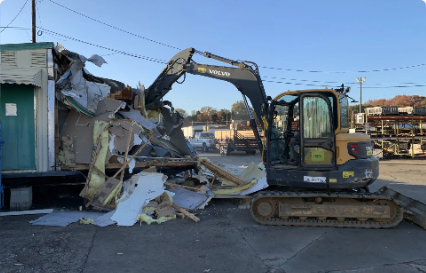
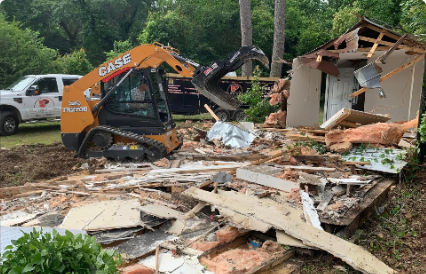
Once the applicable planning, approvals, utility work, and site preparations are complete, the crew can carry out the whole-structure demolition according to the agreed scope. The sequence depends on the house and site. Equipment position, building construction, attachments, neighboring features, debris movement, and loading space all influence how the work progresses.
The goal is to control the work area while separating the structure into material that can be handled, loaded, and hauled. Conditions inside an older or damaged house may not be fully visible before demolition begins, so the contractor must be prepared to adjust the work sequence when previously concealed materials or site conditions become apparent.
House demolition should not be confused with an interior tear-out intended to preserve the building. When the exterior shell and main structure will remain for remodeling, interior demolition services may be the more appropriate starting point.
Step 6: Load, Haul, and Handle the Debris
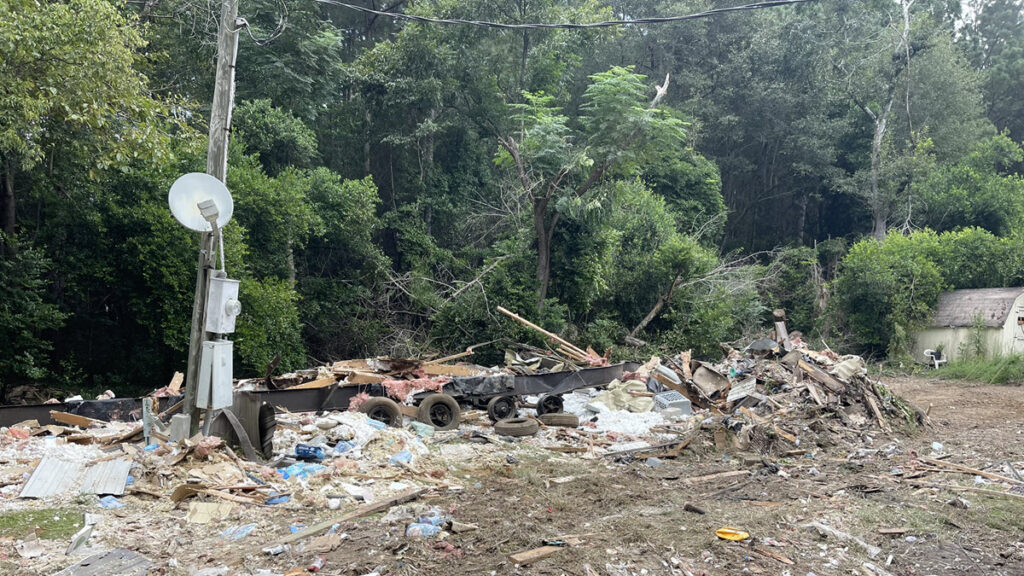
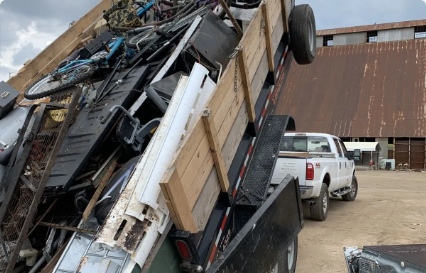
Removing the house creates a substantial volume of mixed material. Depending on the building, that may include lumber, roofing, siding, drywall, insulation, masonry, metal, glass, fixtures, flooring, cabinetry, concrete, and other components. The scope should explain whether loading, hauling, disposal, and general cleanup are included.
When practical, certain materials may be separated for recycling, salvage, repurposing, or reuse. What can be recovered depends on the material's condition, the labor and equipment required, available receiving facilities, transportation, contamination concerns, and whether a practical end use exists. These options should be evaluated project by project rather than promised for every house.
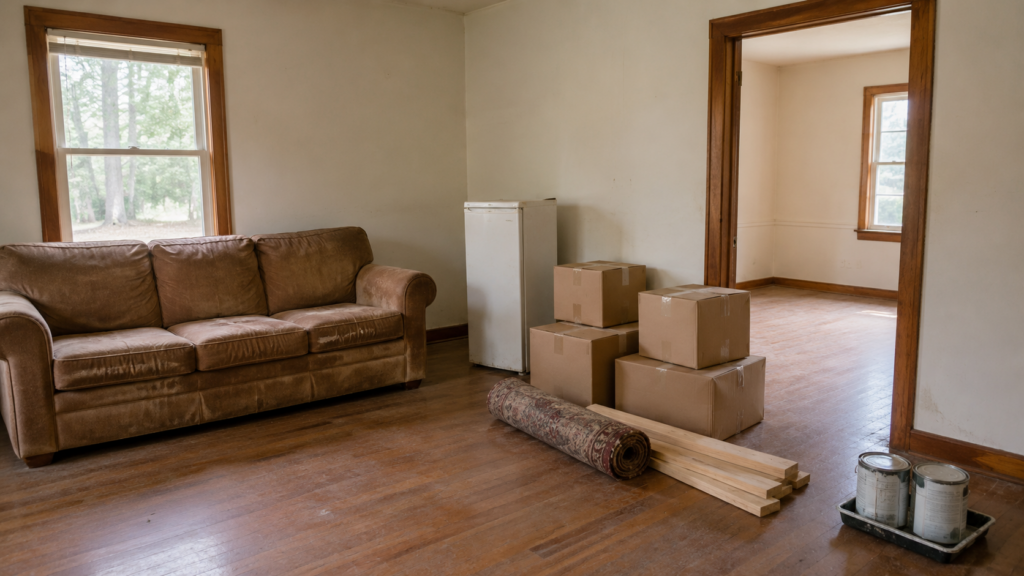
Any owner-retained items or materials should be identified before demolition and placed in an agreed location whenever that is part of the scope. Items left inside a house should not be assumed to be included or excluded without discussion.
Step 7: Decide What Happens to the Foundation
House removal and foundation removal are related, but they are not always the same assignment. A house may rest on a slab, crawlspace foundation, piers, blocks, footings, or a basement system. The owner may want some concrete removed, may need a void filled, or may intend to have another contractor evaluate a remaining feature for future use.
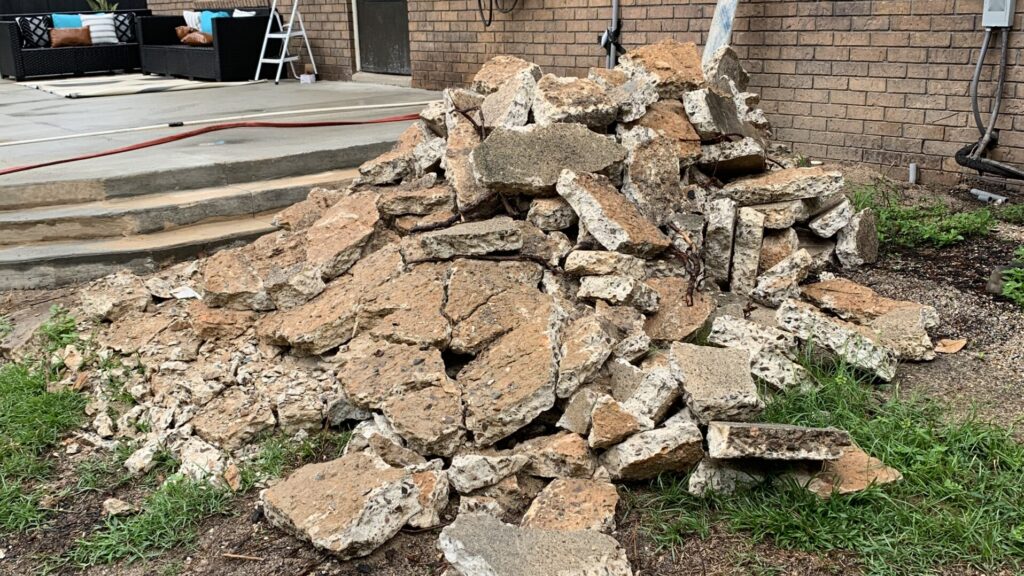
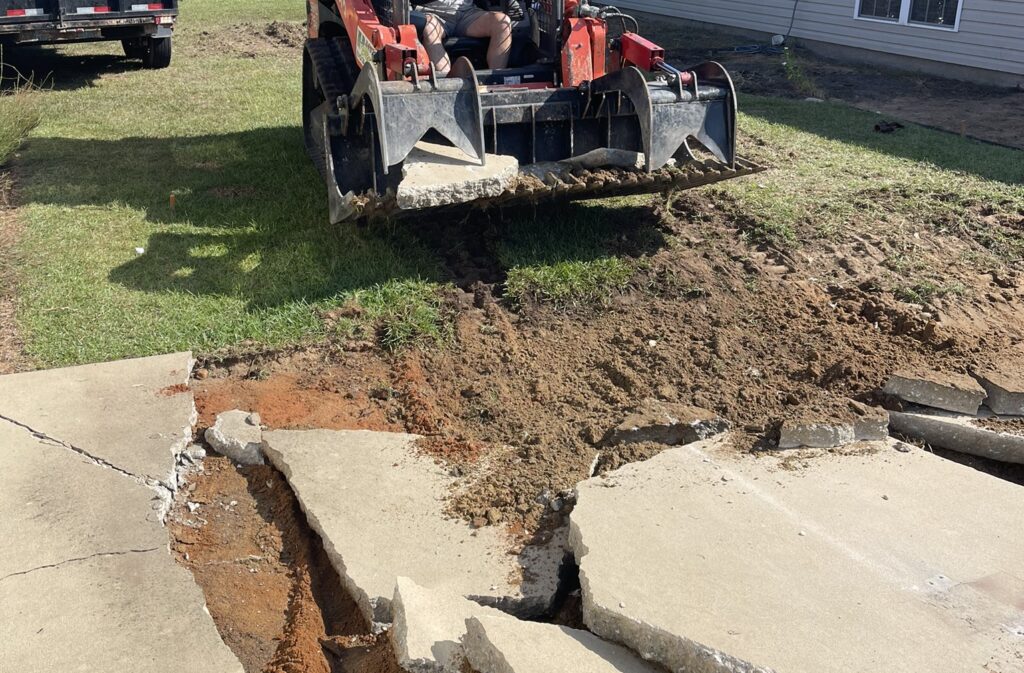
The quote should state whether slabs, footings, block walls, piers, steps, and other concrete are being removed or retained. If foundation removal creates a depression or open area, the scope should also address whether backfill, imported soil, compaction, or grading is included.
Concrete work can add weight, equipment time, hauling requirements, and a different disposal route to the project. The article Concrete Removal in Aiken SC explains several of those considerations in more detail.
Step 8: Agree on the Final Site Condition
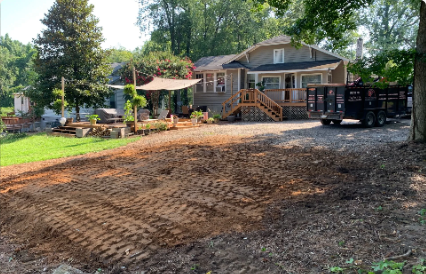
The property owner's next use for the land should help define the finishing work. A cleared site being prepared for sale may have different needs from a lot awaiting a replacement home, landscaping, parking, or another construction phase.
Before accepting the quote, the customer should understand:
- Which structures, attachments, contents, and materials will be removed
- Which concrete, utilities, trees, driveways, wells, septic features, and improvements will remain
- Whether demolition debris and loose property debris are both included
- Whether holes or voids will be backfilled
- Whether imported soil or grading is included
- What general cleanup will be completed
- What will be reviewed during the final walkthrough
Clear final-site language helps the customer compare quotes based on the same result. It also reduces the chance that one party expects bare structure removal while the other expects a property ready for immediate construction or landscaping.
What Affects a House Demolition Quote?
House demolition quotes are shaped by the actual work required, not the building's square footage alone. Factors may include the house's construction and condition, access, attached features, contents, utility responsibilities, permit administration, regulated materials, equipment needs, debris volume and weight, hauling distance, foundation decisions, protection requirements, and the desired final condition.
An unusually low quote may omit work another contractor has included. Before comparing totals, compare the scope, exclusions, hauling, foundation work, cleanup, and responsibilities. The existing demolition cost guide for Aiken SC explains the major pricing factors without assigning an unsupported price to a property that has not been reviewed.
Property owners can also use Questions to Ask Before Hiring a Demolition Contractor in Aiken SC when reviewing the quote and project plan.
Information to Share When Requesting a House Demolition Quote
A useful quote conversation starts with accurate information. When contacting Aiken Demolition, provide as much of the following as possible:
- The complete property address
- Clear photographs of the house from several sides
- Approximate size, number of stories, construction type, and known condition
- Information about attached porches, additions, decks, steps, chimneys, and garages
- Known electric, gas, water, sewer, well, septic, propane, and communication services
- Photos and measurements of gates, driveways, access paths, and nearby improvements
- A list of contents, detached buildings, concrete, or loose debris to be included
- A list of everything that must remain protected
- Any available permits, surveys, inspection reports, utility records, or property documents
- The intended use of the property after the house is removed
Once the work has been scheduled, What Should I Do Before a Demolition Crew Arrives in Aiken SC? provides a practical preparation checklist.
Final Summary
- House demolition in Aiken SC begins with defining the complete scope and desired final result.
- The service may include site review, permit coordination, utility planning, whole-structure demolition, debris hauling, foundation work, and cleanup.
- Attached features, contents, detached improvements, wells, septic systems, trees, driveways, and utilities should be discussed before the quote is finalized.
- House removal does not automatically include every foundation, slab, footing, item of loose debris, backfill task, or grading service.
- Recycling, salvage, repurposing, and material reuse may be considered when practical, but the available options depend on the project.
- The property address, jurisdiction, building history, and project circumstances determine which permit and environmental questions require verification.
- A detailed quote gives the customer a clearer way to compare services and understand how the property should be left.
Need a House or Whole Structure Removed in the Aiken Area?
Contact Aiken Demolition to discuss the house, property access, utilities, attached features, debris, foundation, cleanup expectations, and the result you want for the site.
Get a QuoteFrequently Asked Questions About House Demolition in Aiken SC
What is normally included in house demolition?
The service may include reviewing the property, defining the scope, coordinating permit and utility responsibilities, completing whole-structure demolition, loading and hauling debris, addressing agreed foundation components, and providing the specified cleanup. The written quote should identify exactly what is included for that property.
Does house demolition include removing the foundation?
Foundation removal should be confirmed separately in the project scope. Slabs, crawlspace walls, footings, piers, blocks, steps, and basement components may require additional equipment, hauling, backfill, or grading. The quote should state which concrete will be removed and which portions, if any, will remain.
Who handles the demolition permit in Aiken SC?
The responsible party depends on the agreement and the authority serving the exact property address. Aiken Demolition may handle applicable permit administration when it is included in the scope, or the property owner may handle it in some circumstances. That responsibility should be settled before work is scheduled.
Do utilities need to be disconnected before a house is demolished?
Known utilities must be identified and handled appropriately before demolition begins. Electric, gas, water, sewer, propane, well, septic, cable, and other systems may require coordination with providers or qualified professionals. Closing an account does not necessarily confirm that a physical service has been prepared for demolition.
Are the contents and junk inside the house included?
Contents and loose property debris should not be assumed to be included. Furniture, appliances, stored belongings, abandoned vehicles, yard debris, and unrelated junk can change the debris volume and hauling plan. Tell the contractor what remains on the property so those materials can be addressed in the quote.
Can materials from a demolished house be recycled or reused?
Some materials may be separated for recycling, salvage, repurposing, or reuse when practical. The available options depend on material condition, contamination concerns, labor and equipment requirements, transportation, receiving facilities, and whether a practical end use exists. Recovery cannot be promised for every structure.
What affects the cost of house demolition in Aiken SC?
Important factors may include the building's size, construction, condition, access, attached features, contents, utility responsibilities, permit administration, regulated materials, debris volume, hauling requirements, foundation work, nearby improvements that must be protected, and the requested final site condition.
What information should I provide when requesting a quote?
Provide the complete property address, photographs from several sides, approximate size and construction, known utilities, access details, attached features, contents or debris to be removed, improvements that must remain, available property documents, and how you want the site left after the house is removed.