Quick Answer
Before a house, mobile home, garage, or commercial structure is demolished, active utilities must be identified and handled properly. The property owner and demolition contractor normally coordinate the process, but electric, gas, water, sewer, cable, and other services may need to be disconnected, removed, capped, or confirmed safe by the utility provider, local authority, or another properly qualified professional. Simply closing a utility account does not always mean the physical service has been made safe for demolition.
Utility disconnections are an important part of planning house or mobile home demolition in Aiken SC. A structure may have electrical service, natural gas or propane, public water, a private well, public sewer, a septic system, telephone or internet lines, and underground service lines crossing the work area.
Those systems cannot be treated as an afterthought. Demolition equipment may work near buried lines, meters, service drops, pipes, tanks, drain fields, poles, or connections shared with another building. The safest plan begins by identifying every known service and deciding who must address it before demolition starts.
Aiken Demolition helps homeowners, property owners, contractors, landlords, and businesses discuss utility concerns while planning structure demolition in Aiken SC and nearby service areas. The exact steps can differ according to the structure, property location, utility provider, permit requirements, and what will be built or placed on the property afterward.
Who Is Responsible for Disconnecting Utilities Before Demolition?
Responsibility is usually shared across several parties. The property owner provides information about known services and may need to authorize account changes or utility work. The demolition contractor reviews the work area and explains what must be confirmed before equipment begins operating. Utility providers, licensed tradespeople, local departments, septic professionals, or other authorized personnel may perform the actual disconnection, removal, or capping required for their systems.
The demolition crew should not be expected to guess whether a line is active or whether a meter has been removed correctly. The responsible provider or authority may need to confirm that its service has been disconnected at the appropriate point. Documentation, inspection, a visible removal, or another form of clearance may be required depending on the project.
Important Distinction
Stopping monthly service or closing an account is not necessarily the same as physically disconnecting a utility from a structure. A meter, service line, pipe, or cable may remain in place even after billing stops. Ask what physical work and confirmation are required before demolition.
Which Utilities Should Be Reviewed?
Every property is different, but the utility review commonly includes the following systems.
Electric Service
Electric service may reach a building through an overhead service drop or an underground service line. The electrical provider may need to disconnect the service, remove or secure the meter, and determine what should happen to provider-owned equipment. If another structure will remain on the property, the plan must avoid interrupting service that still needs to stay active.
Property owners should identify the electric provider early and ask what its demolition-disconnection process requires. In portions of the region served by Aiken Electric Cooperative, residential customers can request disconnection through the cooperative’s service process. Other addresses may be served by a different provider, so the property address must guide the conversation.
Natural Gas or Propane
Natural-gas service requires coordination with the gas provider. The location of the meter, service line, and shutoff should be identified, and the provider should explain what disconnection or removal is required before the structure comes down.
Propane systems are private systems and may include a tank, regulator, and supply line. The tank owner or propane company may need to remove fuel, disconnect the system, or relocate the tank. A tank should never be assumed empty or safe based only on how long a building has been vacant.
Public Water and Sewer
Water and sewer arrangements may be handled by a city, county system, utility district, or another provider. The water meter, service line, sewer connection, and any requirements for capping or protecting the lines should be discussed before demolition.
The next use of the property matters. If a replacement home or building is planned, the owner may want to preserve a usable connection where allowed. If the property will remain vacant, the local provider may require a different approach. The demolition plan should reflect the provider’s instructions instead of automatically removing everything in sight.
Private Wells and Septic Systems
Private wells, septic tanks, and drain fields require special attention because they are not ordinary public utility lines. Their locations may not be obvious, especially on older or vacant properties. The owner should share any records, maps, inspection information, or known locations before demolition equipment enters the site.
A septic tank, drain field, well line, or other private facility may need to be protected, abandoned, removed, or evaluated for future use. Requirements can depend on the property and the authority involved. A qualified septic or well professional may be needed to determine the proper next step.
Telephone, Cable, Internet, and Other Lines
Communication lines may enter overhead or underground and may share poles, easements, or routes with other services. Even when an old line appears unused, it should be identified and addressed through the appropriate provider or project plan rather than pulled down or cut without confirmation.
Does Calling SC811 Disconnect the Utilities?
No. South Carolina 811 is the notification center used to alert participating facility operators about planned excavation or demolition. The operators then mark or otherwise respond concerning facilities they own or operate in the proposed work area. SC811 itself does not physically locate, shut off, disconnect, remove, or cap utilities.
Under South Carolina’s underground-facility rules, the party responsible for excavation or demolition must provide notice and check the positive-response system before work begins. The project must be planned to avoid damage to facilities in and around the work area.
SC811 also explains that private facilities are the responsibility of the excavator or owner to have located separately. Examples may include privately owned propane lines, septic components, irrigation lines, electrical lines running from a house to an outbuilding, or other lines beyond a utility operator’s ownership point.
Locating Is Different From Disconnecting
A locate request helps identify underground facilities so they can be protected. A disconnection request addresses an active service that must be shut off, removed, capped, or otherwise made safe. Many demolition projects require both processes.
How Utility Planning Changes for a Mobile Home
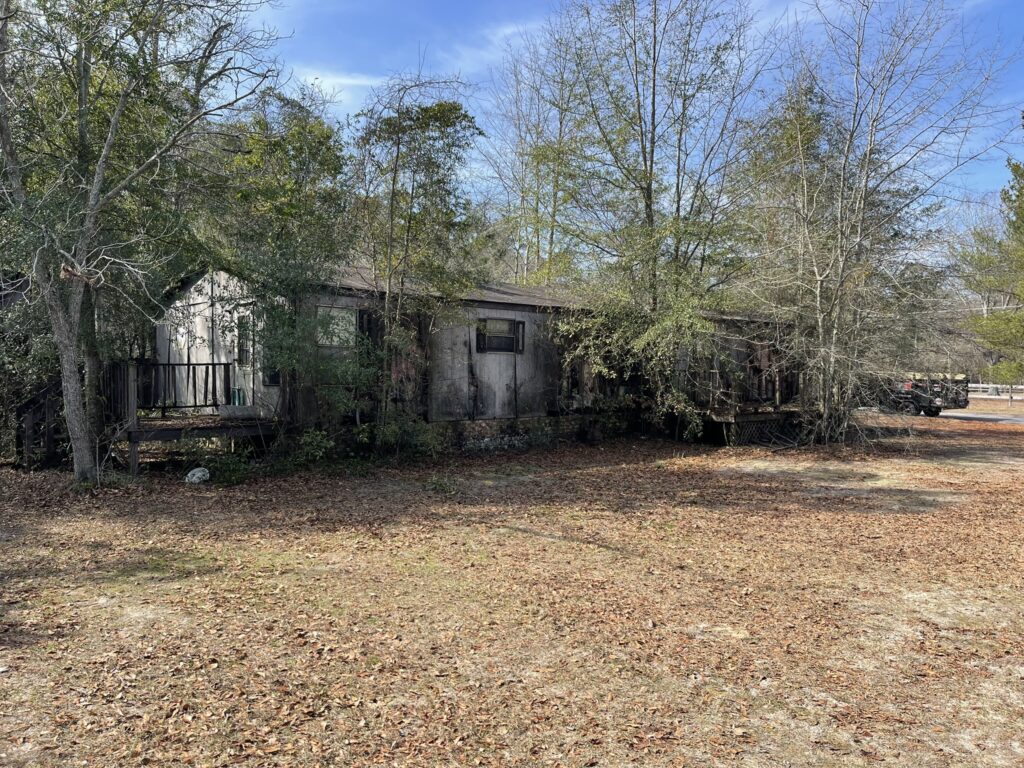
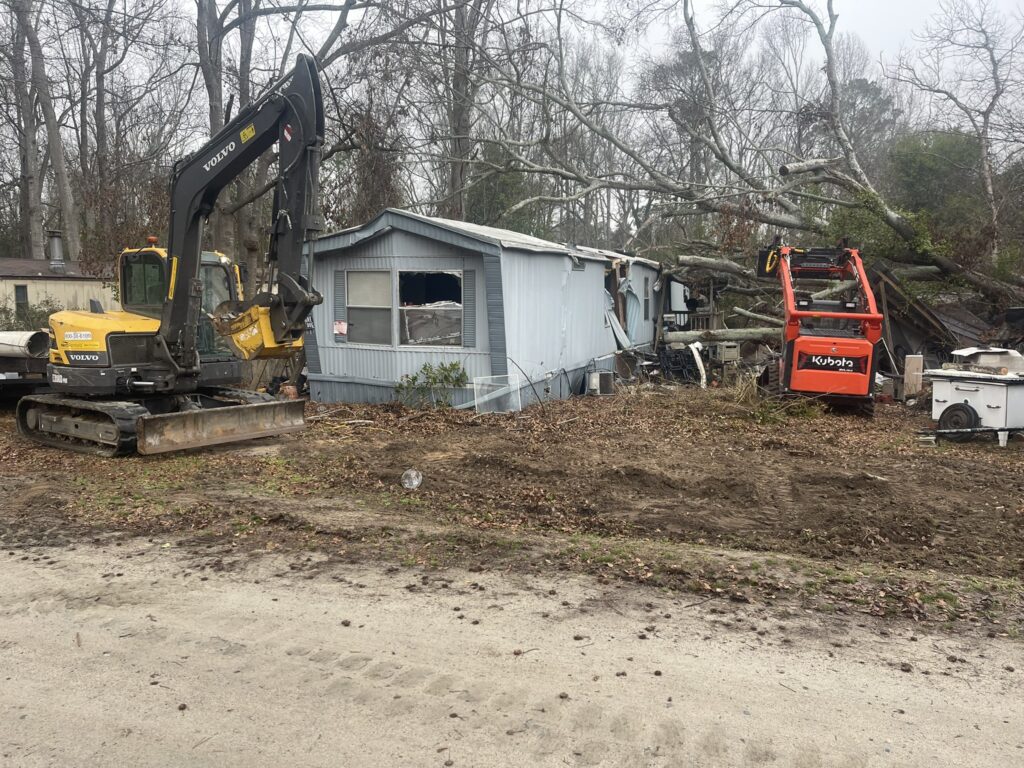
Mobile home demolition and removal may involve electrical service, water and sewer connections, a septic system, propane, HVAC equipment, steps, skirting, decks, tie-downs, blocks, concrete pads, and other materials around or beneath the home.
The utility plan should identify which connections serve the mobile home, which systems belong to the property owner, and whether anything will be kept for a replacement home. If the old home shares a water line, septic system, power source, driveway, or access route with another occupied structure, that information should be discussed before work begins.
For more information about related removal work, read Can You Remove My Old Mobile Home, Shed, Deck, Fence, or House in Aiken SC?
How Utility Planning Changes for a House or Commercial Building
A house or commercial structure may have multiple electrical panels, separate meters, fire-protection systems, gas appliances, larger water or sewer connections, exterior lighting, communication services, or utility equipment shared with another part of the property.
Commercial projects may also involve tenants, neighboring businesses, parking areas, public access, equipment shutdowns, environmental requirements, and systems that must remain operational outside the demolition area. Those projects often require more coordination and a clearer sequence of approvals before demolition begins.
A real-world example of broader project planning can be found in our commercial building demolition project in Denmark SC.
Should Utilities Be Addressed Before Applying for a Demolition Permit?
Permit and utility requirements should be reviewed together because one may affect the other. A local permitting office may ask for information about the structure, utilities, asbestos review, site conditions, or contractor before authorizing demolition. The required sequence can vary according to whether the property lies inside the City of Aiken, elsewhere in Aiken County, or in another nearby jurisdiction.
Aiken County provides permitting services through its Planning and Development Department, while the City of Aiken maintains its own building-permit system. Property owners should verify the requirements for the exact address rather than assuming the same process applies everywhere.
Read Do I Need a Demolition Permit in Aiken SC? for a broader explanation of permit planning.
What About Asbestos and Other Pre-Demolition Requirements?
Utilities are not the only items that may require advance action. South Carolina’s Department of Environmental Services has renovation and demolition requirements for regulated facilities, including advance notification and asbestos-related documentation. Whether those rules apply depends on the structure and project.
The important planning lesson is that disconnection, locating, permitting, environmental review, demolition, hauling, and cleanup may each have their own responsibilities. Starting those conversations early can reduce delays after equipment and crews have already been scheduled.
What Information Should You Gather Before Requesting a Quote?
When contacting a demolition contractor, provide as much of the following information as you can:
- The complete property address
- The type and approximate size of the structure
- Whether the structure is occupied, vacant, damaged, or unsafe
- The names of known electric, gas, water, sewer, cable, or internet providers
- Whether the property uses propane, a private well, or a septic system
- The locations of meters, tanks, poles, panels, septic components, wells, and visible utility lines
- Any utility-disconnection confirmations already received
- Any permits, inspections, surveys, or property records available
- Whether another structure or service must remain active
- What the property will be used for after demolition
Photos of the structure, utility equipment, access path, nearby buildings, and surrounding ground can help the contractor understand the project. For a broader preparation checklist, read What Should I Do Before a Demolition Crew Arrives in Aiken SC?
What Should Be Confirmed Before Demolition Begins?
Before demolition equipment begins working, the project team should have a clear answer to several questions:
- Which utilities once served the structure?
- Which utilities remain active?
- Who owns each meter, line, tank, pipe, or connection?
- Who is authorized to disconnect, remove, or cap each service?
- Have required locate notices and positive responses been completed?
- Are private facilities identified separately?
- Will any utility service remain for another structure or future construction?
- Are permit, environmental, and inspection requirements complete?
- Does the contractor have the confirmations needed to proceed safely?
A clear answer to those questions helps protect workers, surrounding property, neighboring services, and the project schedule.
Final Summary
- Utility disconnections should be planned before house, mobile home, or commercial demolition begins.
- The property owner and demolition contractor coordinate the process, while utility providers or other authorized professionals may perform the required disconnections.
- Closing an account is not always the same as physically disconnecting the service.
- SC811 provides the notification process for locating participating underground facilities; it does not disconnect utilities.
- Private lines, wells, septic systems, propane systems, and other privately owned facilities may require separate locating and professional attention.
- Permit, utility, environmental, demolition, and cleanup requirements should be reviewed together for the exact property address.
Planning House or Mobile Home Demolition in Aiken SC?
Contact Aiken Demolition to discuss the structure, property access, known utilities, hauling needs, cleanup expectations, and what must happen before demolition begins.
Get a QuoteFrequently Asked Questions
Who disconnects utilities before demolition in Aiken SC?
The property owner and demolition contractor normally coordinate the plan, but the utility provider, local department, licensed trade, septic professional, propane company, or another authorized party may need to perform the actual disconnection, removal, or capping. The correct party depends on the service and property address.
Is closing a utility account enough before demolishing a house?
Not necessarily. Closing an account may stop billing without physically removing a meter, disconnecting a service line, capping a pipe, or making the service safe for demolition. Ask the provider and demolition contractor what physical confirmation is required.
Does SC811 turn off electricity, gas, or water?
No. SC811 receives locate notifications and sends them to participating facility operators. Those operators respond regarding their underground facilities. SC811 does not shut off, disconnect, remove, or cap utility services.
Does SC811 locate private septic, propane, or electrical lines?
Private facilities are generally the responsibility of the owner or excavator to have located separately. This may include septic components, irrigation, propane lines, and private electrical or water lines beyond a utility operator’s ownership point.
What utilities should be checked before mobile home demolition?
Review electrical service, water, sewer or septic, natural gas or propane, telephone, cable, internet, wells, and any private lines serving decks, sheds, HVAC equipment, or other improvements around the mobile home.
Can utilities remain for a replacement home or building?
Possibly, but that decision should be coordinated with the provider, permitting authority, contractor, and any professionals involved in the replacement project. A connection should not be preserved, cut, capped, or removed without confirming the approved plan.
When should utility planning begin?
Begin as early as possible, preferably while requesting demolition quotes and reviewing permit requirements. Provider schedules, locate responses, private-line locating, inspections, and documentation may affect the demolition start date.